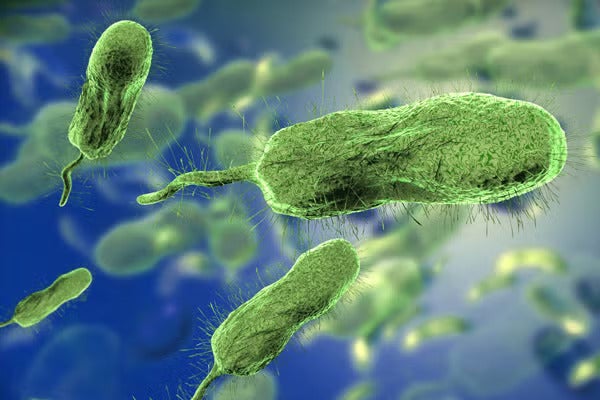
Falling ill after eating shellfish is common enough that the mollusks have developed something of a reputation. This is not unwarranted; over the last few decades, reports of foodborne diseases (FBD) associated with shellfish consumption have been on the increase. One of the chief culprits is a bacterium called Vibrio vulnificus. Shellfish, such as oysters, are filter feeders that sieve seawater through their gills. Their gills trap pathogens like bacteria, which then become highly concentrated in the gut of the shellfish.
Infection with V. vulnificus can be extremely serious, leading to severe illness ranging from gastroenteritis to septicemia or even death. The bacterium is particularly dangerous to people with conditions such as immune disorders or diabetes. In fact, of all the bacteria and viruses that can cause FBD after eating shellfish, V. vulnificus leads to the most serious threats to health. V. vulnificus is found naturally in marine and estuarine environments, but the prevalence of the bacteria varies depending on the water temperature and salinity. Research has shown that most V. vulnificus infections take place during warm weather, when water temperatures rise.
THE SHELLFISH ECONOMY
Vibrio vulnificus is not only a threat to health: it also has serious economic consequences. One study found that a single case of V. vulnificus costs, on average, $3.03 million – far more than any other FBD. The total economic cost of V. vulnificus in the United States is estimated at $319 million every year. At the same time, the seafood harvest remains important to the U.S. economy, particularly in some coastal communities. A 2015 report by the National Marine Fisheries Service found that the value of oyster landings in the U.S. reached $240 million per year.
In Florida, most wild oysters are harvested using traditional, low-tech, low-cost methods. At the heart of this industry is Apalachicola Bay, in Franklin County on the Florida Panhandle. In the past, Apalachicola Bay fisheries have supplied nearly 10% of all domestically produced oysters in the U.S. Almost all fishing here takes place on small, owner-operated boats. Crucially, these vessels, almost without exception, do not have on-board cooling facilities for their catch. In the heat of summer, this heightens the chances of bacteria in the oysters proliferating to dangerous levels.
In 2015, changes were made to the laws governing oyster fisheries in Apalachicola Bay. The aim of the new regulations was to reduce the likelihood of Apalachicola Bay oysters carrying FBD, by limiting the amount of time each vessel could spend collecting oysters. The legal daily harvest period, for boats with no on-board cooling, was cut by four hours a day during the summer season. Rather than being allowed to catch from sunup to 3pm, oysters can now only be collected from sunup until 11am. This means that harvested oysters spend less (un-refrigerated) time on board before being transferred to a processing facility. However, there were concerns that the reduced harvesting time would lead to economic losses, particularly in the small coastal communities that are dependent on the oyster fisheries.
BALANCING FOOD SAFETY AND ECONOMICS
The potential conflict between the need for food safety and the economic sustainability of wild oyster harvesting drove Rosen College’s Dr. Sergio Alvarez to investigate further. Dr. Alvarez has developed a bioeconomic model to examine the impact of the oyster harvest regulations. Bioeconomic models mathematically describe the relationship between natural, biological features or processes (such as V. vulnificus) and socioeconomic systems (like the oyster fisheries.) As such, they can be used to assess the impact of policies like those introduced in Apalachicola Bay.
Dr. Alvarez chose to look at oysters, rather than other kinds of shellfish, because oysters are the source of more than 98% of foodborne Vibrio infections. The 2015 policy only applies to summer season oysters harvested in Apalachicola Bay – nowhere else. As the prevalence of V. vulnificus is directly related to temperature, the amount of time allowed between harvest and landing varies according to the time of year.
A BIOECONOMIC MODEL
To build the bioeconomic model, Dr. Alvarez used oyster trip ticket records from the 2014 and 2015 summer seasons. This covers the last year of fishing under the previous regulations, and the first of the new reduced harvesting hours. Trip tickets include data on the harvester, the buyer, the date of the transaction and the weight of the catch. This meant that Dr. Alvarez could calculate fishing effort, landings, prices, and the value of landings, for each day of the 2014 and 2015 summer seasons.
Dr. Alvarez used the trip ticket data to build a model that predicts the effects of the policy changes on the fishery with a high level of accuracy. When assessing the possible impact of the policy on V. vulnificus infections, there was some uncertainty, as there is not yet any data available on numbers of infections (this would require several years of tracking V. vulnificus infections after implementation of the policy.) Instead, Dr. Alvarez used data including estimates of the costs of each V. vulnificus case. The results achieved by Dr. Alvarez and his colleagues suggest that if just two or more cases of V. vulnificus are prevented by the policy, the benefits will outweigh the costs – with a strong chance that human lives could be saved. According to the model, if 20 cases of V. vulnificus were prevented, the net benefit to society would be in excess of $60 million.
THE IMPACT
Dr. Alvarez has concluded that the new bioeconomic model is able to predict fisher behavior and oyster landings both before and after the introduction of the new policy. The results show that, as might be expected, oyster fishers gather reduced harvests early in the season, due to the shortened harvesting hours. However, this initial downturn is, at least partially, compensated for later in the season, as harvests remain high for longer than they would have if the policy were not in place.
Dr Alvarez notes that Apalachicola Bay is an ecosystem in flux. Around 2012, the oyster stock appeared to collapse, possibly as a result of increased salinity of the water. The reduced stock will have also affected the behavior of oyster fishers – such as when they arrive at the fishery and for how long – but that was not covered by the current model.
Interestingly, some recent research suggests that consumers associate Gulf oysters – including those harvested in Apalachicola Bay – with a higher risk of FBD than oysters from other regions. This could potentially reduce demand for Apalachicola Bay oysters. However, if the harvest-time policy is proven to be effective, and this is widely known, the policy could actually improve demand for Apalachicola Bay oysters, leading to a price increase.
Overall, the model developed by Dr. Alvarez has the power to define the relationship between food safety interventions, such as the oyster harvesting policy, and management of fishery resources. The model could also be adapted to other interventions, involving other biological and socioeconomic systems. The ideas developed by Dr. Alvarez and his colleagues have the potential to improve food safety while ensuring that economic interests, like those of the coastal communities of Apalachicola Bay, are protected.