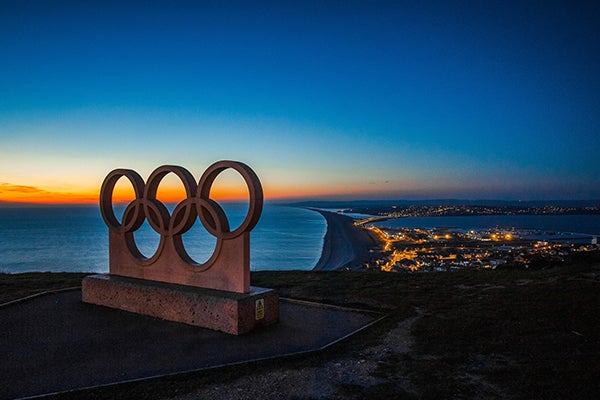
The International Olympic Committee (IOC) has long striven for the Olympic and Paralympic Games to be more, and mean more, than just a month of sport. The IOC’s goal, for the games to have a positive impact on communities, culture and whole countries – both preceding, during and long after the events have ended – is epitomized in the term ‘Olympic legacy’. Explaining the concept in 2017, IOC released the following statement:
‘Olympic legacy is the result of a vision. It encompasses all the tangible and intangible long-term benefits initiated or accelerated by the hosting of the Olympic Games/sport events for people, cities/territories and the Olympic Movement.’ The tangible benefits of the IOC’s vision include the potential for economic growth and improvement – particularly in terms of tourism revenue and job creation – whilst less tangible benefits include: the promotion of the host country, national pride, prestige, and enhanced destination image, as well as positive visitor attitude and behavior. A decade after the 2010 Winter Olympics in Vancouver, Canada, the Aboriginal Youth Sport Legacy Fund still supports amateur athletes of indigenous origin. The fund continues to empower and improve the quality of life of First Nations peoples, maintaining the focus on inclusion that began with the Games. In the five years following the 2012 Summer Olympics in London, around 110,000 jobs were created in the six boroughs surrounding the Queen Elizabeth Olympic Park (the central venue for the events), a rate of growth that was significantly higher than in the city as a whole.
But is the Olympic legacy always constructive? Dr. Asli Tasci, Dr. Jeannie Hahm and Dr. Deborah Breiter Terry from Rosen College, University of Central Florida, investigate the impact of the 2016 Summer Olympics on Brazil, with a specific emphasis on how hosting the mega-event has changed the country’s image.
RIO 2016
Previous research has confirmed that megaevents have the potential to positively change the image of a place, mainly due to the massive media coverage which accompanies such occasions. However, the resultant development of local infrastructure and products, heightened awareness of a place, increasing tourism demand and enhancement of local pride also contribute to a bolstered domestic and international identity. As a result, there is high demand amongst tourism and destination marketers for mega-events that may greatly improve, strengthen or change a place’s image. Unsurprisingly, the chance to host the Olympics is therefore always hotly contested. In October 2009, Brazil beat rival bids from Japan, Spain and the USA to host the 2016 Summer Olympic Games in Rio de Janeiro. For Brazil, this was incredibly significant: a chance to show the world that the country was more than an ongoing political and economic crisis – and that the country’s capital, Rio de Janeiro, was safer than the ‘most violent city in the world’ tag notoriously suggested. Hosting the games was seen as an opportunity to ‘hasten the transformation of Rio de Janeiro into an even greater global city’ (International Olympic Committee, 2016). Understanding whether this vision was successful or not is a complex issue.
The researchers point out that ‘destination image’ is in reality a dynamic concept, and there are very few longitudinal studies that monitor the stability of image change caused by these mega-events. With destination image as a valuable tool for destination marketers, a better understanding of the pattern of changes caused by mega-events is critical, allowing for better stabilization of destination image after an event. To do this, first of all we need to get a firm grasp on the idea of ‘image’ itself.
AN IMAGE OF SUCCESS
Drs. Tasci, Hahm and Breiter Terry researched the changing image of Brazil, before and after the 2016 Olympics, by assessing three different types of image. ‘Country image’ is the general perception or image of a country based on variables such as its history, economy, culture and politics; whereas ‘destination image’ is the perception of a particular place, area or city as a tourist ‘destination’ (this may differ greatly from the overall country image). Making this distinction is important, especially for destination marketers. The final area researched was the ‘Olympics image’, i.e., the public perception of the mega-event and impact on the Olympic brand image. The researchers hypothesized that the pattern of the changing image will be as follows: there is a difference between country image before and after the Olympics; there is a difference between destination image before and after the Olympics; there is a difference between the Olympics image before and after the Olympics.
THE STUDY AND ITS FINDINGS
To test their hypotheses, the authors of the study employed the use of an online platform to carry out a survey designed to investigate country image, destination image and Olympics image before and after the 2016 Summer Olympics in Brazil. The survey also collected sociodemographic and other data that has previously been shown to have an effect on image formation (e.g., gender). In order to effectively assess change in image over time, the survey was repeated in different groups at the following intervals: one month before the Olympics, one month after the Olympics, five months after the Olympics, and 13 months after the Olympics. The data were then analyzed.
Interestingly, in contrast to most other research on the topic (although very little other research has taken such a rigorous longitudinal approach), the results here showed no significant difference between the first and final timepoints, in terms of country or destination image. In brief, the Olympic Games mega-event had not resulted in any stable or long-lasting image change for Brazil, a complete contradiction to the long-held belief in that intangible element of Olympic legacy – the improvement of the rest of the world’s view of the host country.
The researchers suggest that hosting a mega-event can, in fact, have a negative impact on destination image. Drs. Tasci, Hahm and Breiter Terry note that, in the case of Brazil, the increased media coverage in the lead up to the Games only highlighted the economic, social and political issues that remained rife in the country. In fact, 70% of Brazil’s Olympic coverage was focused on negative issues, with almost weekly news stories suggesting Brazil was not suitable to host the mega sporting event. In addition, although the International Olympic Committee reported that they hoped the Olympics would lead to renewed patriotism and pride amongst host country residents, in this case there were many reports of local resentment towards the 2016 Summer Games. Finally, the 2015 Zika virus outbreak generated high levels of anxiety, particularly among those who were due to travel to the country to either compete in or watch the games. The Brazilian government’s decision not to postpone the games, despite suggestions that the event risked spreading the virus to countries with less resources to cope with it also led to negative press. Considering all of these negative socioeconomic and political factors, and the dearth of positive press surrounding the games, the three colleagues suggest that, in Brazil’s case, we might actually consider the fact that the data show no image change a positive outcome!
The data also showed that the country image was less stable than the destination and Olympic image, with a dip in image occurring five months after the games. As previously suggested by literature in this area, strong image attributes can overcome negative ones; Brazilian destination marketers could thus think about sharing positive images to turn this trend around (e.g., scenic beauty and beaches). The consistency of the Olympics image in this research is testament to the resilience of the Olympic brand and vision – but this study also shows that the strength of the Olympics image and its ability to positively impact host country image cannot be taken for granted. If the improvement of a country and destination image as a result of a mega-event is only temporary, or is in fact negligible, then governments, tourism boards and destination marketers need to consider whether the financial, social and environmental costs of such an event are worth it at all.