What makes a person visit a particular restaurant? A good place to start is brand image. Branding is how a company markets itself to potential and existing customers. In the fine dining industry, brand image is the customer’s perception of a restaurant company. It is based on their experiences and interactions with the brand and can evolve over time. Ultimately, brand image helps determine the extent to which one restaurant is preferred over its competition, with the associated attitudes and emotions of a fine dining experience powerfully contributing to customers’ interactions with a company. With a collaborator, Dr. Hancer, Professor at UCF Rosen College of Hospitality Management, investigates the role that perceived trustworthiness of a brand plays in a person’s willingness to visit a restaurant, and the resulting enjoyment of their experience.
Finding gaps in the existing research landscape for the role of brand image, Dr. Hancer and his collaborator’s new paper – “Building brand relationship for restaurants: an examination of other customers, brand image, trust, and restaurant attributes” – analyzes new data to reveal important findings on this so-far-overlooked area of research. Prior studies previously focused primarily on customer satisfaction. However, for the first time the important role that “other customers” (i.e. customers dining at the same restaurant as the focal customer, but who the focal diner is unacquainted with) play in shaping brand image to build brand preference, has been discovered. The important research throws new variables into the mix for consideration, when thinking about how to help a restaurant succeed in a fiercely competitive industry.
SUCCESS: ATTRACTING NEW CUSTOMERS
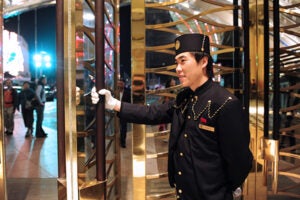
The restaurant industry offers an intangible service. Whilst you might be able to look up photos of the meals or interior décor beforehand, there’s no concrete way to judge what the service you receive will be like before actually visiting. As a result, going to a new restaurant poses a risk to customers who may be reluctant to spend a lot of time and money for a potentially disappointing experience. Brand image is crucial for quelling any doubts potential new customers may have at this stage. Researchers and restaurants alike are therefore very invested to find out what creates a strong brand image that inspires diners to choose one particular unknown restaurant over another.
Up until this study, research on brand image in the field of fine dining focused on how the atmospherics, food quality and service contribute to customer behavior after eating at a restaurant. For instance, would a customer leave a review or recommend the place to a friend? However, a crucial component of restaurant success is overlooked in such investigations: how to get customers through the door in the first place. Dr. Hancer’s team contends that attracting new clientele is dependent upon brand image. His study uses the integration of “other customers” into a conceptual model of fine dining to explore the relationship between brand image, customer satisfaction, trust levels, and brand preference.
CUSTOMER BEHAVIOR
In the fine dining industry, considerable attention has been paid to how aspects of a restaurant experience impact on customer behavior. For instance, a positive dining experience has been shown to increase customer satisfaction and loyalty, whilst also helping to build a positive, trustworthy brand image. Examining prior research, Dr. Hancer found that the most important things impacting customer behavior are: atmospherics, food quality and quality of the service. Atmospherics act as a physical first impression that, if done well, suggests a pleasant evening ahead. Dr. Hancer hypothesizes that atmospherics will positively impact both brand image and customer satisfaction. However, it is food quality – according to Dr. Hancer’s research – that is the single greatest factor in determining how satisfied a customer will be. Whilst customers will place different values on, say, tastiness versus nutritional content, all will agree that food quality matters. As a result, Dr. Hancer predicts food quality positively impacts both brand image and customer satisfaction. The quality of the service is the most intangible aspect of fine dining, dependent on a positive interaction between the staff and customer. Diners, especially at high-end restaurants, value waiting staff who are empathetic, responsive and reliable. Dr. Hancer suggests that high service quality will also positively affect the perception of a restaurant’s brand image and the number of happy diners.
“OTHER CUSTOMERS”
There’s one more aspect of fine dining that impacts brand image and customer satisfaction: “other customers”. Dr. Hancer argues that the other customers, dining in the same restaurant as a focal customer but who are also unacquainted with the customer in focus, will impact the focal customer’s level of satisfaction. The opinions of a diner can be affected by how many other customers there are, what they look like and how they behave. For instance, customers feel more positive when surrounded by people who look like themselves because this boosts self-esteem. Dr. Hancer contends that other customers could positively affect both brand image and customer satisfaction. Arguing that customer satisfaction positively impacts brand trust and that brand trust positively impacts brand preference, Dr. Hancer’s study creates a conceptual model to test these hypotheses. The research aimed to understand the extent to which all these factors determine a customer’s preferred brand of restaurant.
QUIZZICAL ANALYSIS
Dr. Hancer and his collaborator carried out their research using a questionnaire, comprised of six sections. The first five sections contained questions to be answered using a number between 1 and 5. Selecting “1” equated to answering “strongly disagree” and “5” meant “strongly agree”. Section one focused on customer perceptions of restaurant attributes, including: atmospherics, food quality, service quality and “other customers”. Section two of the questionnaire measured satisfaction, section three assessed brand image, section four examined a customer’s level of brand trust, and section five consisted of demographic questions. Data was collected from restaurants in Istanbul. The criteria for selection – fine dining restaurants – meant that the establishments were required to offer a luxury experience with high prices in order to be chosen. Guests who visited five of the selected restaurants, between February 2015 and April 2015, were invited to take part in the study. Customer responses were subsequently recorded both on-site and online. The researchers removed any responses that could have been influenced by other factors, leaving only the most reliable responses. Univariate analysis, a way to find patterns in collected information, was used for each of the observables measured and then a statistical package processed the data.
WHAT DID THEY FIND?
For the 324 responses used in the analysis, 45.1% were male and 54.9% were female. Around half of the respondents were aged between 36-45 years old, and almost 30% were 26-35 years old; the two groups made up the vast majority of the sample. The sample was largely well educated, with 72.1% possessing a bachelor’s degree, and relatively well-off, with 82.4% earning over $1500 a month. Both service quality and “other customers” were found to have a significant effect on brand image. However, rather surprisingly, the effect of food quality and atmospherics on brand image was not significant. Also, whilst atmospherics, food quality, and service quality did all play a significant role in overall satisfaction, it was not impacted by “other customers”. The results suggest that brand image does positively affect customer satisfaction, and both brand image and customer satisfaction were shown to positively impact brand trust. When combined, brand image and customer satisfaction accounted for 30% of the brand trust that customers have for restaurants. Finally, 31% of a customer’s brand preference is determined by this level of brand trust.
BRAND PREFERENCE: IMPLICATIONS
As other studies have suggested, Dr. Hancer’s study confirms the theory that atmospherics, food quality and service quality affect customer satisfaction. However, the research goes further than previous investigations in the field, highlighting the role of “other customers” in creating a positive brand image for a restaurant. Also, the research did not show a positive correlation between food quality and atmospherics and brand image, contradicting findings of earlier studies. Dr. Hancer questions whether this inconsistency stems from the geographical location of the restaurants studied – Turkey. As a collectivist culture, diners in Istanbul are more likely to put value on the group experience of eating out, when compared to people from individualist cultures, like the USA. Brand preference, therefore, occurs when the brand image fits with the personal values of customers.
What the results of Dr. Hancer’s research tell us is that restaurants looking to succeed should consider brand image carefully, and tailor it according to the clientele they wish to attract. Brand preference occurs when the brand image fits with the personal values of customers. If the brand image appeals to customers who share the values promoted, then these customers will respond positively. As a result, potential customers gain a more positive brand image of the restaurant in question, creating a positive experience that begins before a customer even sets foot inside the restaurant. Cultivating a strong brand image acts as the foundation for customer satisfaction – and therefore ultimately success in the fine dining industry.