Properly cleaning and disinfecting restaurants has always been important, yet it has become even more crucial after the outbreak of COVID-19. In September 2020, diners and restaurants in many states across the US were allowed to start operating at full-capacity again, but only if they followed specific rules and new hygiene-related practices.
Restaurants now need to be cleaned, sanitized, disinfected, and ventilated every day, to limit the spread of COVID-19. Additionally, customers have become increasingly conscious of the hygienic conditions of public spaces they visit, particularly restaurants, hotels, and other indoor environments, where the virus can be easily contracted.
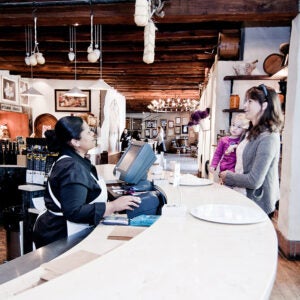
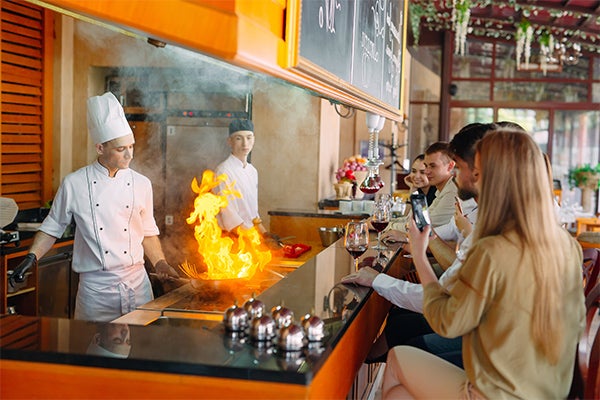
Recent studies suggest that open-kitchen restaurants—diners where customers can directly observe what is happening in the kitchen and how their food is being prepared—have become particularly popular after the outbreak of COVID-19. These restaurants allow people to see who is cooking their food and under what conditions, and then intervene or refuse to eat what they ordered if they are unhappy with the hygienic conditions in the kitchen.
PARTICULATE MATTER IN OPEN-KITCHEN RESTAURANTS
Despite their greater transparency and perceived hygiene-related advantages, open-kitchen diners also put customers in closer contact with the cooks and the kitchen environment. This means that customers are not only able to observe how the chefs are working and smell the appetizing aromas of the food that they are preparing, but it also means breathing in most of the fumes produced in the kitchen.
Past studies have found that commercial cooking can produce fumes that have adverse health effects on humans, as they contain what is known as particulate matter (PM) pollution. PM is a combination of micron-sized solid particles and/or liquid droplets that propagate in the air.
When regularly inhaled, this invisible matter has been found to cause acute or chronic respiratory diseases, including heart and lung cancer. The International Agency for Research on Cancer (IARC) has classed PM as carcinogenic to humans and as a significant component of harmful air pollution. Moreover, past research suggests that, due to their prolonged exposure to PM, many chefs and other restaurant staff are at higher risk of getting lung cancer and other respiratory diseases than other professionals.
During the COVID-19 pandemic, PM has become even more dangerous, as it was found to be associated with the spread of the virus and with the manifestation of its most severe respiratory symptoms. For instance, when researchers analyzed data from almost 4,000 counties in the US they found a correlation between exposure to PM pollution and COVID-19 mortality. Another study suggested that even a short-term exposure to PM increases people’s likelihood of contracting COVID-19 and other viral infections. To limit the spread of the virus and reduce its most severe manifestations, restaurant owners and managers should therefore ensure that the air in the dining area is clean and contains limited amounts of invisible particulate matter.
A COMPREHENSIVE FIELD STUDY
As many epidemiologists confirm that air pollution, and specifically PM, could play a role in the spread of severe manifestations of COVID-19, examining the air quality in indoor public spaces, including restaurants, is of crucial importance. Nonetheless, very few studies have tried to determine how much PM is circulating in restaurants, and none of these have focused on open-kitchen restaurants.
To fill this gap in the literature, a team of researchers from three universities in USA and Korea (FIU, UCF and KHU) carried out a study assessing the concentrations of PM in open-kitchen restaurants. Their hope was to establish a baseline assessment of indoor PM pollution in open-kitchen dining rooms, which could inform the work of both public health professionals and restaurant managers. To do this, Dr. Okumus and the rest of the team conducted a series of field tests assessing the concentrations of PM10 and PM2.5, two types of invisible matter known to cause severe respiratory diseases, inside the dining room of a chain-operated, open-kitchen restaurant. Concurrently, the team also measured the levels of PM immediately outside the restaurant, so that they could later compare the data recorded with that taken inside the dining room.
To measure the concentration of PM10 and PM2.5 both inside and outside the restaurant, Dr. Okumus and her colleagues used two portable real-time particle counters that have also been used in previous studies focusing on PM pollution. Their air-monitoring tests were carried out in January 2019 over the course of a week, during the restaurant’s 6-hour service.
CONCERNINGLY HIGH LEVELS OF PM
The data analyses yielded shocking results, as they found that the concentrations of PM inside the restaurant’s dining room were extremely high.
PM₁₀ concentrations ranged between 634.8 μg/m3 and 5,172.1 μg/m3, which is far higher than the Environmental Protection Agency acceptable standard. In fact, this concentration is of a level that would be concerning outdoors in any city, even the most polluted ones. The concentrations of PM2.5, on the other hand, ranged between 166.5 μg/m3 and 631.6 μg/m3. This is concerning, as even a 5-minute exposure to over 500 μg/m3 of PM2.5 can pose serious short-term and long-term health risks.
Unsurprisingly, the research team found that the concentrations of PM appeared to fluctuate, peaking between 7 and 9 pm when the dining room was most populated, and therefore the cooks were preparing a greater number of meals. Before 7pm, thus during happy hour, they observed gentler spikes in the concentrations, which might indicate that fewer people were ordering food and thus less cooking took place.
When they compared these concentrations of PM to those taken outside the restaurant, the researchers found that the latter were significantly lower, meaning that the quality of the air was much better outside the dining room than it was inside it, as anticipated. While there were a few moments during the day in which the concentrations inside the dining room were acceptable, throughout most of service they were alarmingly high.
MOVING TOWARDS THE REDUCTION OF PM IN RESTAURANTS
The recent study carried out by the research team provides the first empirical evidence of the extremely high PM concentrations to be found in the dining areas of open-kitchen restaurants. As exposure to PM pollution has been linked with a greater susceptibility to COVID-19, their work suggests that many open-kitchen restaurants might be unsafe, irrespective of their hygienic practices.
Interestingly, the PM concentrations recorded by the researchers were far higher than those reported by previous public health research assessing air-quality in restaurants. As none of these previous works specifically focused on open-kitchen restaurants, their findings suggest that restaurants where the dining room and the kitchen are separate could be safer for customers.
In the future, the findings gathered by Dr. Okumus and her colleagues could inform the development of effective strategies to improve the quality of air in dining rooms across the U.S., such as the installation of air-filtration and aeration systems. In addition, they could encourage public health professionals and governments to introduce new health and safety protocols specifically aimed at reducing PM pollution in restaurants.