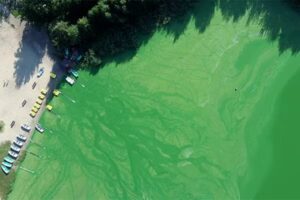
Clean water is the thread that ties waterfront communities together, drives their economies, and provides a high quality of life for residents and an unforgettable experience for visitors. However, as human activities threaten the world’s waterways in multiple ways, HAB events pose increasing biological and socio-economic risks. Nutrient runoff from streets, lawns, septic tanks, and farms flows into waterways and leads to eutrophication. In addition, climate change is leading to warmer water temperatures in the ocean and in other waterbodies. Independently, each of these factors is known to foster the growth of microorganisms that cause HABs. Together, they can provide highly suitable conditions for the occurrence of HABs, raising the prospect for a future where HAB events are more frequent and intense.
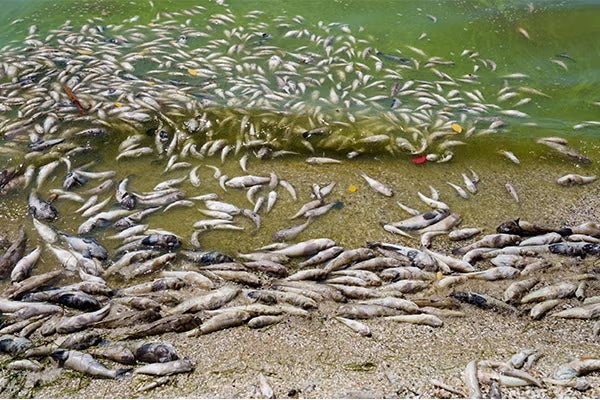
While shocks like hurricanes receive more attention, the “slow violence” of stressor events such as HABs may hold the answer to building resilient waterfront economies. The state of Florida has recently experienced several HABs, most notably outbreaks of red tide (Karenia brevis) and cyanobacteria (Microcystis spp., and Anabaena spp.), with recent K. brevis blooms lasting from October 2017 through February 2019. HABs have become a widespread environmental, economic, and public health problem along numerous waterfront communities in Florida that are now having to live with massive fish kills and respiratory irritation caused by toxins released by the harmful algae.
While Florida’s coastal communities have proven resilient to HABs in the past, these latest blooms appear to be larger, last longer, and have more devastating impacts than previous events. In addition, HABs have become more frequent in recent years and threaten to become a chronic issue for many communities, not only in Florida, but across the world. Not surprisingly, the spread of these blooms has affected the tourism industry, which has a substantial impact on Florida’s economy, since the 118.5 million people who visit Florida each year provide an infusion of $111.7 billion to the state’s economy.
These effects have been dramatic and while HABs are becoming more frequent and of longer duration, the economic impacts of these events have been under-studied, making it difficult to determine the true costs of HABs. Paradoxically, as public awareness of ongoing HAB events has increased—notably resulting in a beneficial push for intervention to prevent, mitigate, or eliminate bloom impacts—ultimately, this awareness may also induce changes in consumer behavior that risk the socio-economic wellbeing of the region. Thus, Gulf communities must find a balance to raise awareness, preparedness, and response to hazards without shocking their economies.
The 2017–2019 K. brevis HABs provided a worrisome picture of what this problem may look like in the future. In that time period, an unprecedented bloom of K. brevis moved into West Florida’s beaches and waterways, significantly impacting local economies, public health, and the environment. The bloom was so severe that the Governor declared a state of emergency in Charlotte, Collier, Hillsborough, Lee, Manatee, Pinellas and Sarasota Counties to allow for additional state resources for response.
In this research project, the impact of this HAB is being evaluated at a county level to identify how consumption patterns change in counties when they are affected by HABs, relative to counties that are unaffected or marginally affected. Overall, through this research, a quantitative framework will be developed to estimate the cost of the 2017–2019 red tide HAB. In addition, the project is also analyzing social media posts to explore how information flows may be playing a role in amplifying the economic impacts of red tide.
POLICY AND MANAGEMENT IMPLICATIONS
The research will provide insights that may shape public and decision-maker opinions, and thus lead to policy changes and/or management improvements that are necessary to alleviate the burden on communities affected by HABs. Specifically, the findings of this research will inform discussions on the overall economic costs of the red tide blooms and hence the potential benefits of reducing the incidence and severity of these blooms. Specifically, the research findings will provide information that can be employed as one side of a benefit–cost equation when evaluating policies or programs to combat the effects of red tide blooms. Currently there is little information of this type available. Thus, this new information about the costs of red tide blooms may help answer questions such as, how much should society spend in ensuring these events are prevented or mitigated in the future? Similarly, by providing information on what economic sectors are most impacted by the red tide blooms, the findings may inform the targeting of strategies and policies to support these sectors and prevent bankruptcies or layoffs. Furthermore, by identifying the economic sectors that suffer the heaviest impacts from the red tide blooms, this information may also inform future research on the impacts to the workforce in these sectors.
In situations where HAB prevention and mitigation are not possible, the findings of this research will provide pathway models which impacted sectors and stakeholders can use as blueprints for socio-economic mitigation. To gain control of the narrative around K. brevis HABs, stakeholders can look to these pathways as frameworks for deploying information about the HAB that raises awareness without magnifying economic losses. Three main Product Milestones (M) will make up the output portfolio from this project:
M1 – econHABs Database: The initial phase of this project will result in the development of the three-part econHABs Panel Database. The Panel Database will include an assembled panel of gross sales for more than 80 economic sectors across Florida’s 67 counties, different types of HAB indicators or indices, indices for other hazards that may result in systematic variation in consumer behavior (such as tropical cyclones), and macro-economic indices (such as unemployment and consumer sentiment).
M2 – Model Results: The evaluation framework consisting of panel data regression models and simulation of these results with input–output modeling will provide reliable estimates of the direct, indirect, and induced economic losses caused by K. brevis blooms. These will be used to provide an assessment of the aggregated economic loss associated with the 2017–2019 Karenia brevis blooms in Florida for the following sectors: tourism, including hospitality and service; public health and related expenditures; and commercial fisheries.
M3 – Outreach and Education Materials: There are a number of potential end-users and stakeholders that this project seeks to reach. First, the research team will target policy and decision-makers in multiple organizations across all levels of government and civil society through publication in relevant magazines, speaking opportunities in multiple venues (such as the Governor’s annual conference on tourism), and audiences or meetings with elected officials or supporting staff. The research team is also targeting the general public as an end-user, and to reach them the team will develop an interactive website that will include a GIS StoryMap and informational webpages that support K-12 teachers who are interested in bringing the topic of HABs into their classroom. The research community is the third stakeholder group, and to reach them the research team will develop an open-access research website where all data and results, as well as any publications resulting from this research, will be curated and made available to the public.