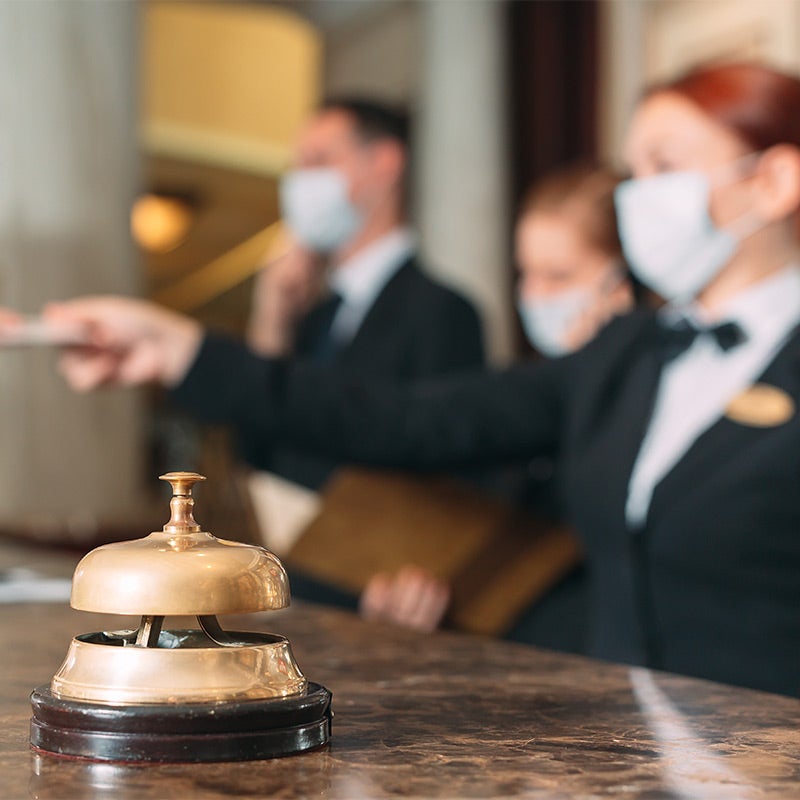
The COVID-19 pandemic and its aftermath have significantly impacted the tourism and hospitality sector. Before the pandemic, hospitality and tourism supplied nearly 330 million jobs worldwide, but that number has diminished substantially since the pandemic. After the industry reopened and began to recover, many hospitality and tourism workers considered alternative career opportunities. Career transitions have become more commonplace as individuals continue to reevaluate their strengths, interests, and career trajectories. Historically, hospitality and tourism workers have faced fundamental challenges in an increasingly digitally automated economy. For example, research has found that only 26% of hospitality and tourism workers have attained undergraduate degrees or higher-level education. On-the-job training is also limited, with 17% of workers receiving no training and 49% receiving only short-term training. Given the lower level of education across the industry, hospitality and tourism workers should focus on enhancing their practical skills and abilities to augment their career mobility and resilience.
THE RESEARCH
Dr. Arthur Huang and Mr. Mark Baker from UCF’s Rosen College of Hospitality Management explored ONET, a comprehensive skill taxonomy database, to better understand the career transition prospects for entry-level hospitality and tourism workers, based on skill and ability overlaps across occupations and industries. The study’s primary objective was twofold. First, the authors explored research themes regarding skill training and career development from the previous decade. Second, an exploratory analysis was conducted to create the SWAT (Skills, Work activities, Abilities, and Technology skills) profiles for representative positions from different industries.
Using a set of Boolean strings to design search phrases, including terms such as ‘career’ or ‘training,’ Dr. Huang and Mr. Baker narrowed down the results to peer-reviewed studies published during the previous decade to focus on the most recent and relevant discussions. From there, they categorized the results into three broad themes. They found several themes related to skill/competency training, career change/barriers in tourism and hospitality, and education programs. Ultimately, the researchers uncovered a paucity of literature on career development, enhancement, and transition in the hospitality and tourism literature. Given their results, the authors recommended that further research explore career development paths and skill enhancement for hospitality and tourism workers.
THE SWAT PROFILES
The researchers further leveraged the ONET database to identify which skills were associated with entry-level hospitality jobs and in-demand occupations such as business intelligence analysts, nursing assistants, and advertising sales agents. Desk clerks and waiting staff were chosen as the hospitality and tourism industry representatives, given that these are entry-level roles. The SWAT profiles for these positions were then compared against entry-level roles from other industries.
The authors discovered a significant overlap of skills between jobs in and out of the tourism and hospitality industry, such as basic spoken and written language skills, deductive reasoning ability, and speech recognition. There was also considerable overlap between the SWAT profiles of the jobs based on interpersonal skills, such as communicating with supervisors, peers, or subordinates, and establishing or maintaining interpersonal relationships.
When looking at specific hospitality and tourism roles, the researchers found that desk clerks had many overlapping ‘abilities’ (e.g., speaking and writing skills) with other roles but fewer overlapping ‘work activities’ (e.g., coordinating the work and activities of others). The role with the greatest SWAT overlap with desk clerks was real estate agents, with a staggering 54 out of 56 overlapping SWAT profile characteristics. The researchers found that waiters/waitresses had the greatest SWAT overlaps with nursing assistants. The most significant overlap between these roles came from the ‘skills’ section of the SWAT profile, which includes social perceptiveness and coordination. Waiters/waitresses demonstrated the least overlap with other jobs in the ‘technology skills’ area, including spreadsheet, presentation, and word processing software.
Based on the prototype from this research, the authors developed a user-friendly visualization tool named ‘Skill Gateway’ that can visualize the occupational relationships based on specific skill relationships. Figure 1 illustrates the significant overlap of skills between frontline hospitality jobs and health services management based on the importance of skills and skill levels, visualizing the potential for career advancements.
IMPLICATIONS OF THE RESEARCH
This research highlights the need for research investigating cross-industry, skill-based career development in the hospitality and tourism industry. In addition, the authors emphasize the need for more research and discussion about career transitions, skill training, and education programs in tourism and hospitality.
Mapping the career development and transition potential for different tourism and hospitality roles can significantly benefit individuals seeking professional development inside and outside the hospitality and tourism industry. In the wake of the COVID-19 pandemic, more individuals are looking for work and considering career transitions, making it an opportune time for further research.
The findings also demonstrate the critical skill overlap between hospitality and tourism roles and jobs in other industries. The authors’ results prove that research into hospitality and tourism workers’ specific workplace skills and abilities can be informative and used to develop practical career transition models.
Furthermore, this study contributes to the existing career development research, emphasizing the importance of technical skill development for hospitality and tourism workers. Research suggests that the global workforce is becoming more technologically orientated; therefore, workers would benefit from gaining more technical skill training. Dr. Huang and Mr. Baker indicate that research regarding technology-oriented skills and abilities for skill-based career transitions in tourism and hospitality must continue and accelerate.
The authors recommend that managers identify particular avenues to assist workers in developing their technical skills to broaden their employment opportunities; this may include coding bootcamps or massive open online courses (MOOCs). Such options may enable workers to advance their careers both inside and outside their current industry. Given that, on average, hospitality and tourism workers are at a relative wage disadvantage compared to other sectors, employers must offer valuable educational and career development opportunities for their workers.
The researchers also recommend that future vocational development models explore how hospitality and tourism workers can overcome career boundaries. In addition, future work must also consider career development issues that certain populations, such as women, face in the hospitality and tourism industry.
Overall, the study highlights gaps in the current literature surrounding career development and transition in the hospitality and tourism industry, and the need for further research in the area. Additionally, the authors demonstrate how to leverage publicly available skill taxonomy data and data visualization methods to gain insight into this crucial issue with broad societal impacts.