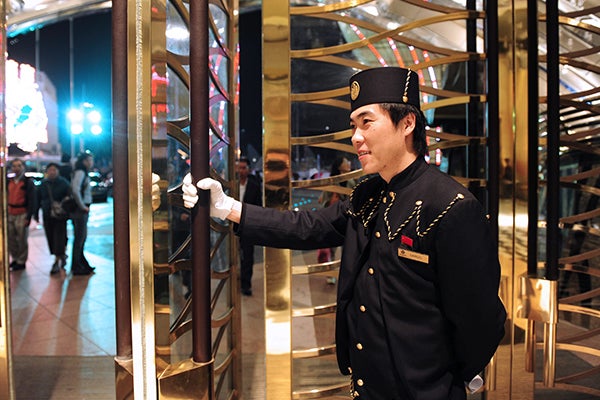
Around 17 million people, or 11% of the US working population, are employed in the domestic hospitality and leisure industry, according to the US Bureau of Labor Statistics for 2019. Millions more are employed overseas by American hospitality and leisure companies internationally, including globally recognised brands such as Hilton Worldwide and Marriott International.
SUCCESS IN DIVERSITY
The sector leads the way in terms of employing a diverse workforce. Compared to other industries, hospitality and tourism are particularly attractive to – and dependent on – employees from different heritage backgrounds and migrant workers. The sector traditionally employs more women than men and is increasingly recruiting more people with disabilities, as well as people who can find it hard to find employment, such as veterans.
Diversity is therefore a dominant industry theme, with diversity management vital to commercial success. But what can the wider business community learn from leading tourism and hospitality companies about corporate diversity and diversity best practices? That’s the question asked by Dr. Fevzi Okumus, Professor of Hospitality Management at UCF Rosen College. Dr. Okumus and his collaborator, a former Ph.D. student from Rosen College, report their findings in research published in the Journal of Hospitality Marketing & Management: ‘Diversity management: what are the leading hospitality and tourism companies reporting?’
LITERATURE REVIEW: MIND THE GAP
This study reviews current academic literature on diversity management in the field. Research in the general business field has tended to concentrate on the evolution of diversity management, the challenges that may arise in this practice, and the impact of diversity management on team performance and global perspectives. Other studies have identified best practices, such as: leadership commitment, incorporating diversity management into overall business strategy, and establishing quantitative and qualitative measures of diversity. In addition, broad business research has looked at how to ensure leaders are accountable for achieving diversity initiatives, how to attract a diverse talent pool when recruiting, and educating management and staff about the benefits of diversity. These areas are all great groundwork for further research.
Yet there has been a lot less specific research into diversity in hospitality and tourism. Existing studies have looked at the business case for disability inclusion, ethnic minority diversity, gender diversity and language diversity. However, what has been missing is an investigation into the foundations of a theoretical framework for diversity management in the sector. Dr. Okumus’ work fills in these gaps, focusing on the analysis of diversity management practices adopted by companies considered to be field leaders.
DIVERSITY HIGHFLYERS
The companies selected for this study were all recognised at the annual awards of DiversityInc. DiversityInc’s Top 50 award assesses companies’ diversity performance in four key areas: talent pipeline, equitable talent development, CEO/leadership commitment, and supplier diversity. Taking his sample from the Top 50 list for 2017, this study focused his research on hospitality companies Sodexo and Aramark; hotel chains Marriott International, Wyndham Worldwide and Hilton Worldwide; and media and entertainment companies Comcast NBC Universal and The Walt Disney Company. Together, these seven companies employ around 1.5 million people worldwide.
TOP 10 TEMPLATE
What did the study involve? Using content analysis technique, the researchers looked at the companies’ websites and published reports, pulling information on corporate and social responsibility policies and practices, as well as diversity management. Content about best practices, noted on DiversityInc’s website as part of their annual ranking process, was also considered. The companies’ data was then coded against a framework of 10 measures. Seven of the measures emerged in the literature review. For instance, whether or not companies had corporate diversity councils, or programs in diversity training and cultural awareness. Other measures include whether or not companies were committed to supplier diversity, employee mentoring and networking, and whether companies offered support for women, LGBT programs, and same-sex benefits. All the above are considered to be important diversity policies and practices.
However, as a result of the widening definition of diversity in society, this study also included three additional areas of diversity management. Namely, measures to support intergenerational, disabled and veteran employees. Following the initial research, this study proposes that these top 10 measures could form the basis of a template for best practice in diversity management.
AND THE RESULTS ARE IN…
Leading the pack is hospitality company Sodexo – the only company out of the seven reviewed to score on all ten measures. Sodexo was also just one of two companies to have an inter-generational diversity initiative, the other is Comcast NBC Universal. To cement Sodexo’s position as trailblazer, the firm is also committed to delivering programs for individuals with disabilities by 2025. According to DiversityInc, Sodexo employs 75% more African Americans in management positions than any other company in their Top 50 list. “Diversity and inclusion continue to play a significant role in our organizational success,” says Sodexo Global Chief Diversity Officer Rohini Anand. “Evolving and sustaining an inclusive culture that supports the diversity of those we serve is a strategic business priority and ongoing commitment of Sodexo worldwide.” The report confirms the firm’s commitment to best diversity management practice.
Close front-runner, media and entertainment company Comcast NBC Universal, scored in nine of the ten measures reviewed, with the exception of diversity training. The company employs 34% more Latinos in management positions than the other Top 50 companies, according to DiversityInc. Chief Diversity Officer David Cohen outlines the company’s ethos: “The results from embracing important values that respect and include different experiences, thoughts and philosophies directly benefit our customers, our communities and the thousands of people we employ.” He will no doubt be pleased by the recognition of Comcast NBC Universal’s diversity achievements.
Another highflyer, hotel group Hilton Worldwide, also scored for nine of the 10 measures, and Marriott International and Wyndham Worldwide both scored in eight. However, all three failed to score against inter-generational programs – and Marriott International and Wyndham Worldwide both lacked programs targeted towards supporting disabled employees. Amongst the hotel groups’ achievements noted in the report, Marriott International has a strong record in female employment, with 45% more women in senior leadership roles than the Top 50 average. Also, Hilton Worldwide has 48% more Black, Latino and Asian employees in management roles than the Top 50 average. And Wyndham Worldwide has double the supplier diversity than the Top 50 average.
At the bottom of the league sit entertainment giant, The Walt Disney Company, and hospitality company Aramark, who both scored for only five of the measures reviewed. These firms failed to score for diversity training, employee networking and mentoring, intergenerational programs and disability programs. Yet on the plus side, The Walt Disney Company offers promotions to Latinos at a 75% higher rate than the Top 50, and Aramark has 42% more Asians on their board of directors than the Top 50 list average. So, while they show some positive signs of progress in diversity – there is still room for improvement.
WHERE COULD THIS LEAD?
Although the 10 measures used in the study provide a valuable template for diversity management, this study reveals more work needs to be done. And not least because the study relies on information about diversity management practices provided on companies’ own websites. To combat questions of data reliability, Dr. Okumus suggests future studies could use information collected from staff surveys and interviews. This would be useful for looking at how diversity management practices are implemented throughout organisations, and investigating the grassroots effect of such diversity policies. Interestingly, this study also proposes that companies could be comprehensively analysed as individual case studies, and diversity research strands could be expanded further to include themes such as religious awareness and global diversity initiatives.
TAILORED APPROACH TO SUCCESS
For the first time, this study brings together best practices as reported by leaders of diversity management performance in the hospitality and tourism industry. Additionally, because information about companies’ practices was gathered from self-published content, the work also assesses companies’ corporate communications performance. Considering diversity management policies and practices, the research shows that hospitality and tourism companies are performing better than ever before.
However, this study argues that the inclusion of three additional measures in the study – to support inter-generational, disabled and veteran employees – supports the need for a broader and more inclusive definition of diversity. “The uniqueness of each program highlights the importance of customizing diversity management policies and practices to the individual needs of the companies, instead of following a ‘one size fits all’ approach”, argues the study lead.
This important research confirms that diversity management practices are not only important measures of how inclusive organisations are as employers. Instead, the report details how some of the world’s leading companies regard best diversity management practice as vital to their overall strategic and corporate success.
“With rising awareness regarding diversity management in the hospitality and tourism field,” this study concludes, “it is important for companies to assess the impact of their diversity management efforts on their overall business and corporate strategies and performance.”