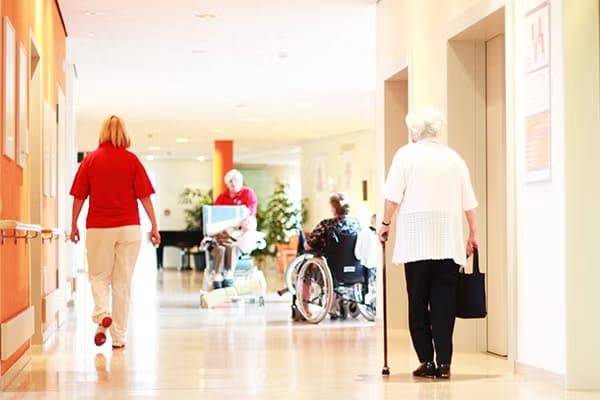
Aging is inescapable, and old age awaits most of us. How we spend our so-called ‘golden years’ is important, not only to ourselves but our friends and family. In some countries, older people remain with their family until they pass on, but in other, mainly developed countries, an entire sector exists to care for them. Central to this sector are senior living communities—residential facilities designed to cater to the needs of older adults, particularly those who may require assistance with daily activities, healthcare, and social engagement.
In the United States, such senior living communities are big business. However, the business is changing, mainly driven by the demands of those with a resigned eye that their life’s journey is heading towards such a facility and the friends and family who will, hopefully, visit them. In brief, they expect more. But what, exactly? The senior living community sector is increasingly looking to hospitality, and two researchers from UCF Rosen College of Hospitality Management have provided clear guidance by tapping into the sentiment of those who care the most.
For Dr. YunYing Zhong, Dr. Tingting Zhang, and their co-author, the connection between the senior living community and hospitality sectors needs re-examining. For years, the two sectors have been viewed differently, and at first glance, that makes sense—hospitality speaks of ‘guests’ who are usually transient or returning at best, while the senior living community sector has ‘residents’ who are usually permanent. There are other differences: senior living communities have a narrow target audience—older adults—and offer specific, associated services, including healthcare, daily assistance, and long-term residential care. Meals, for example, are more likely to be guided by nutritionists rather than master chefs. Because of their healthcare priorities, senior living communities are governed by stricter regulations and employ specialists in healthcare management and social work. Furthermore, financial commitments to senior living communities are substantial and long-term.
Still, Zhong, Zhang and their co-author see the strong associations between hospitality and senior living communities. For example, senior living communities share many operational similarities with hotels, including food and beverage services, recreation and event planning, entertainment, and housekeeping. Therefore, managing senior living communities demands staff with similar skills to those needed in the hotel sector, including interpersonal skills with staff and residents, organizational ability, and business acuity. Notably, there’s much that hospitality can contribute to senior living communities to bolster their offering. This isn’t an offer; it’s driven by demand. The research team are well aware of this and designed a simple but ingenious study to shine a light on that demand and guide the shift towards a hybrid model of senior living communities that embraces more hospitality.
THE VOICE OF THOSE WHO CARE
Before social media, residents of senior living communities lived primarily hidden from society, visible only to the occasional regulating inspector and the transient eye of visitors popping in. Demands for improvements were, therefore, largely unheard. Social media changed that by giving a very public voice to residents and their friends and families.
Facebook is arguably the most popular social media platform for senior living community residents and baby boomers with parents in senior living communities and the knowledge they’re not too far away themselves. Senior living community facilities invariably have their own Facebook pages and encourage comments and reviews. And because Facebook also allows various scoring frameworks, such as stars and thumbs-ups, for researchers, this translates into something precious: data.
The researchers combined their respective expertise in senior living management and technology innovations in hospitality and designed a study using RapidMiner Studio 9.3 software—a data mining, text mining, and machine learning tool—to collect and analyze reviews on the official Facebook pages of 125 senior living communities in the U.S. The communities were not randomly selected; they represented the leading companies in the U.S. regarding the number of senior living communities owned or managed, resources, and innovation practices.
They were particularly interested in what residents and their friends and family were saying and their level of satisfaction with their facilities. To measure this, they performed a sentiment analysis—a computational technique to categorize the polarity of each Facebook review, i.e., whether a review was positive or negative based on the star rating. Specifically, a 3+-star rating was considered a proxy for satisfaction, while a one or 2-star rating indicated dissatisfaction. Text mining of the review content—comments such as ‘It is a wonderful place to be in SO many ways!’ or ‘They are unorganized, condescending and act more like salespeople than caregivers’—added value to the polarity data. The richness of the review text allowed for a more nuanced understanding of the factors affecting the satisfaction and dissatisfaction levels of those with connections to a senior living community and whether they’d recommend it to others. What the researchers learned has given impetus to the need for a shift in the priorities of senior living communities.
EXPECTING MORE
The study identified five key factors that influence satisfaction, dissatisfaction, and recommendation behavior: the quality and efficiency of services provided by the facility, its physical layout, the social interactions and community feel within it, the cost of being there, and the amenities that enhance the experience. These are all factors that, to a large degree, resonate with the hospitality sector and drive the necessary innovations for commercial success. They are in the curricula of hospitality training colleges such as the Rosen College of Hospitality Management. Furthermore, hotels and other hospital brands are experienced in adjusting to the ever-changing needs of those they serve.
What stands out in the study is that while the traditional priority of senior living community facilities is the healthcare of its residents, those residents and their families and friends expect more. For example, when residents and their family and friends discuss healthcare services on Facebook, their level of satisfaction focuses more on how medical staff behave rather than their clinical skills and expertise. They want a ‘hospitality-rich resident experience’ beyond just medical care.
Notably, the study found that the ‘hospitality’ definition is not tied to a single element—it is a combination of multiple integrated elements and practices that may be second nature to the hospitality sector but are increasingly relevant for those managing such facilities. It has highlighted the need for the senior living community sector’s evolution from a healthcare-focused model to a hybrid one incorporating healthcare and hospitality to provide residents with a more holistic and enriched experience. Of course, such a model also has benefits for the hospitality sector.
OPPORTUNITIES IN A HYBRID MODEL
Large senior living companies such as those represented in this study have become attuned to the shift in demands of residents and their families. They are increasingly providing a range of services, including hospitality amenities, to differentiate themselves. Their challenge is finding those with the right skills. This is why senior living operators should engage more with hospitality academic programs and why the senior living industry presents an expanded job replacement opportunity for hospitality graduates. Hospitality students, for example, are trained in customer service, which is, as this study shows, increasingly important in senior living communities, as are the operational aspects of hospitality, such as food and beverage services, housekeeping, and event planning. Hospitality students can apply these skills to enhance the resident experience.
According to the researchers, gerontology and healthcare literature rarely explicitly addresses the role of hospitality in senior living. Most of the research in these fields examines senior living from the lenses of care quality, such as hospitalization rate and resident welfare. Hospitality is something of an add-on—necessary, but not necessarily a focus demanding research.
Zhong, Zhang and their co-author have shown otherwise. They point out that given the many similarities between senior living and hotel industries, they can share the same hospitality formula for success. Such thinking opens the door for innovative collaborations between academic institutions and senior living communities. At the end of the day, such sharing and innovation are critical—the inescapability of old age means that it gets most of us in the end, and we deserve to enjoy it.