WHEN WORDS BECOME WINDOWS INTO BEHAVIOR
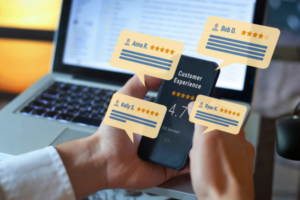
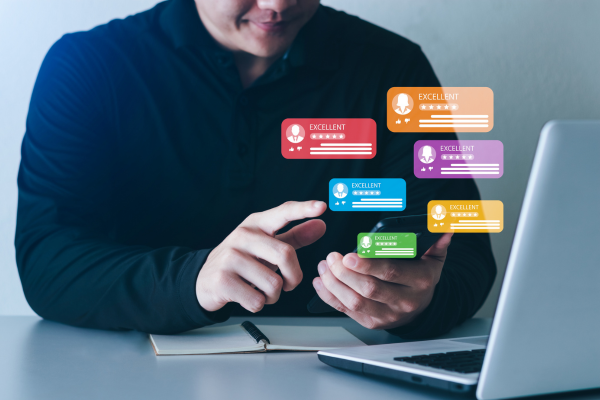
In today’s hospitality landscape, data is everywhere. From TripAdvisor to Yelp, guests leave behind digital footprints that reveal their experiences, emotions, and expectations. But while most research has focused on what people say about their stays, few have asked a deeper question: Can these words predict what guests will do next?
Park and his colleagues saw an opportunity to bridge this gap. They recognized that while surveys and self-reported intentions have long been used to understand customer behavior, they often fall short of capturing what people actually do. Guests may say they intend to return, but do they? Online reviews, they realized, offer something more tangible—evidence of action. A second review from the same guest is not just feedback; it is proof of a revisit.
This study dives into the heart of that idea. By analyzing over 33,000 reviews from top-rated U.S. hotels, the researchers applied the Theory of Planned Behavior (TPB) to real-world data. TPB suggests that attitudes, social norms, and perceived control shape intentions, which in turn drive behavior. But instead of relying on surveys, the team used machine learning to extract these psychological constructs from the language of reviews. Their goal? To see if the words guests write can reveal whether they will come back.
BEYOND STARS AND SENTIMENT: THE QUEST TO UNDERSTAND WHY WE RETURN
For years, hospitality researchers have mined online reviews for sentiment—positive or negative—and topics like cleanliness or service. These insights helped hotels understand what guests liked or disliked. But they rarely explained why guests returned. The missing link was theory.
The Theory of Planned Behavior has long been a trusted framework in consumer psychology. It posits that behavior is shaped by three forces: attitude (how we feel), subjective norms (what others think), and perceived control (how easy it is to act). In hospitality, TPB has been used to study eco-friendly choices, booking decisions, and travel intentions. But most studies relied on surveys and hypothetical scenarios, not actual behavior.
Park and his team wanted to change that. They saw online reviews as a rich, untapped source of behavioral data. Unlike surveys, reviews are unsolicited and reflect real experiences. A guest who writes multiple reviews for the same hotel is likely a repeat visitor. This insight allowed the researchers to move beyond intentions and study actual behavior.
They also recognized that traditional sentiment analysis was not enough. To truly understand behavior, they needed to identify the psychological drivers within the text. Using topic modeling and sentiment scoring, they mapped review language to TPB constructs. Words like “wonderful,” “friendly,” and “easy” became indicators of attitude, social influence, and control. This approach transformed reviews from opinion pieces into behavioral predictors.
We moved beyond intentions to uncover what guests actually do—how their words reveal the psychology behind repeat visits.”
INSIDE THE MACHINE: HOW REVIEWS BECAME DATA
The researchers collected over 47,000 reviews from TripAdvisor’s top 25 U.S. hotels, narrowing the sample to 33,667 after cleaning. They focused on English-language reviews from 2010 to 2023 to ensure consistency. Using topic modeling (LDA) and sentiment analysis (VADER), they quantified TPB constructs based on keyword dictionaries validated by experts. Revisit behavior was defined as guests who left more than one review for the same hotel, aligning with TripAdvisor’s guidelines. Generalized Structural Equation Modeling (GSEM) tested theoretical relationships, while neural networks assessed predictive accuracy.
THE VOICES OF RETURNING GUESTS
The data came from real people—travelers who stayed at top-rated hotels across the U.S. and shared their experiences online. With over 33,000 reviews spanning more than a decade, the sample included diverse perspectives from New York to Hawaii. About 30 percent of reviews were from repeat guests, offering a robust foundation to study revisit behavior. These voices, once scattered across the internet, became the heartbeat of the research.
THE WORDS THAT SIGNAL A RETURN
The study found that TPB constructs—attitude, subjective norms, and perceived control—were all significant predictors of revisit intention. Guests who expressed positive emotions, referenced social influence, or described ease of booking were more likely to return. Revisit intention fully mediated the relationship between these constructs and actual behavior. Neural networks confirmed the predictive power of these insights, achieving up to 75.9 percent accuracy in training data and 65.6 percent with resampling.
FROM FEELINGS TO FORECASTS: WHAT THE REVIEWS REALLY SAY
According to Park and his colleagues, the language of reviews is more than emotional expression—it is a window into decision-making. When guests describe their stay as “worthwhile,” “easy,” or “recommended by friends,” they are revealing the psychological forces behind their choices. Attitude reflects satisfaction and emotional connection. Subjective norms show the influence of peers and family. Perceived control highlights convenience and flexibility.
These constructs do not just shape intentions—they predict behavior.
The study’s mediation analysis confirmed that revisit intention is the key link between psychological drivers and actual returns. This finding strengthens TPB’s relevance in hospitality and shows that online reviews can validate behavioral theory. It also challenges the assumption that sentiment alone drives loyalty. Instead, it is the interplay of emotion, influence, and control that matters.
By decoding review language, hotels can predict loyalty and personalize experiences that truly resonate with returning guests.”
TURNING REVIEWS INTO ROADMAPS FOR RETURN
For hotel managers, this research offers a new lens to understand guests. By analyzing review language, they can identify what drives loyalty and tailor experiences accordingly. If guests value autonomy, emphasize flexible policies. If social influence matters, highlight peer recommendations. Sentiment tracking tools can be refined to detect TPB constructs, offering deeper insights than simple positivity.
Marketing strategies can also benefit. Knowing that certain words signal revisit intention, hotels can craft messages that resonate with guests’ psychological drivers. Loyalty programs, personalized offers, and targeted campaigns can reinforce the desire to return. Operational teams can use review analysis to prioritize improvements that enhance perceived control and satisfaction.
Most importantly, this approach is scalable. With machine learning, hotels can analyze thousands of reviews in real time, turning feedback into actionable intelligence. The result is a smarter, more responsive hospitality experience—one that listens, learns, and leads guests back.
THE NEXT FRONTIER: GLOBAL VOICES AND NEW CONTEXTS
While this study focused on English-language reviews from U.S. hotels, the methodology can be expanded. Future research could explore multilingual data to capture cultural nuances in behavior. Applying TPB to other sectors—restaurants, airlines, attractions—could reveal new patterns. Researchers might also examine how trip purpose, demographics, or crisis events like COVID-19 shape revisit behavior. As digital data grows, so does the potential to refine behavioral theories and enhance customer understanding.