A recent study by UCF Rosen College’s Dr. Edwin Torres and Dr. Tingting Zhang shines a light on the impact of wearable technology on employee wellness programs (EWPs). Their research specifically involves employees in the hotel industry, who have a unique set of work circumstances and challenges. Results were promising in several key wellbeing areas, yet one aspect of wellness was found to be too great a challenge for their intervention without making wider changes to working conditions.
EMPLOYEE WELLNESS PROGRAMS
We are now at a point where industry and society recognise the importance of promoting wellbeing among the workforce. Responding to increasing healthcare costs and developing greater social responsibility, employers tend to recognise a need for EWPs. They are regarded as important for fostering wellbeing among employees. This results in increased budgets for EWPs, as businesses recognise that promoting wellness can help to improve work productivity and performance.
Indeed, in reviewing the existing literature, Torres and Zhang found evidence that promoting employee wellness leads to business benefits, including reduced spending on healthcare, reduced absenteeism, fewer workplace accidents, and improved working relationships. Furthermore, EWPs send the message to employees that their organization cares about their wellbeing.
HEALTH AND WELLBEING RISKS IN HOSPITALITY
Hospitality is a particularly challenging setting in which to establish an EWP due to the nature of the industry and individual job roles. However, this also makes implementing EWPs in the hospitality sector all the more important. The very nature of the work means that there is a higher than average rate of injury. For example, among housekeeping staff there is a rate of injury of 7.9 employees per 100, and among restaurant cooks there is a rate of acute trauma of 4.0 per 100.
Hospitality is also associated with high staff turnover, stressful work, low pay, and shift work, all of which have knock-on effects on sleep, susceptibility to metabolic diseases, and issues surrounding work-family balance. Job insecurity is a common concern for individuals working in the hospitality sector. As irregular hours are common and rates of pay tend to be low, this leads to financial insecurity.
WHY EWPs ARE IMPORTANT IN HOSPITALITY
Previous studies on EWPs demonstrate wide ranging benefits, including reductions in: health insurance claims, sick leave, mental health issues (depression, stress, and anxiety), and injuries. These benefits also include increased self-control, cardiovascular activity, job satisfaction, productivity, and employee relations. Yet while the benefits of EWPs have been widely discussed in previous research, Torres and Zhang note a need to quantify the effect of technology-based interventions specifically, such as wearable devices like the Fitbit. They recognized that in the uniquely challenging work environments of the hospitality sector, technology could help to facilitate health habits.
The researchers found a range of demographic and social factors influencing participation in EWPs in the hospitality sector, noting that those least likely to participate are those most likely to benefit. Barriers to participation include a lack of time, incentive, and convenient location, while other factors influencing participation include co-worker, supervisor, and union influence, as well as culture, family situation, and workplace policies.
INTEGRATING TECHNOLOGY INTO EWPs
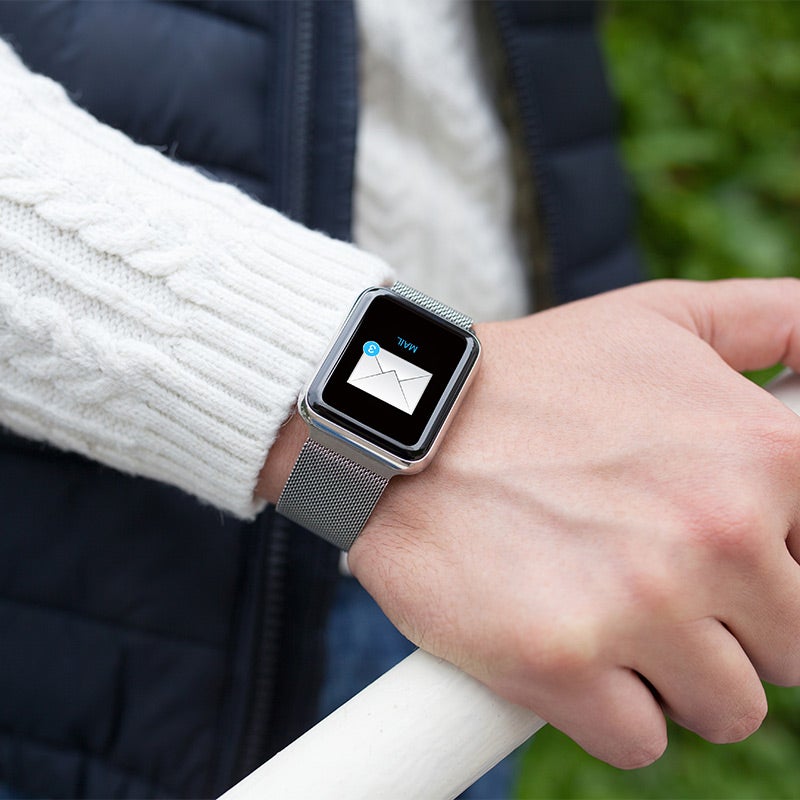
The benefit of incorporating new technologies into EWPs is that it allows researchers to quantify health behaviors. Wearable devices like the Fitbit, for example, allow for the tracking of activity, sleep and other variables. This leads to improvements in productivity and wellbeing, while also helping to prevent injury.
Incorporating technology in general has been shown to lead to reductions in weight, body mass index, and waist circumference. As this technology has advanced into wearable versions, newer research suggests that devices like the Fitbit can positively impact a range of wellbeing factors, including increasing daily step counts, and fostering friendly competition and communication among co-workers. Indeed, this increased social engagement has been shown to increase the success of EWPs. Further research has also shown that wearables can help to lower the rate of accidents while boosting productivity and wellbeing among workers.
DOWNSIDES OF INTEGRATING TECHNOLOGY
While technology has made us more sedentary, it may also be important in helping us improve our health and wellbeing. Nevertheless, there are potential issues related to integrating technology into EWPs. Lack of data privacy is a key drawback, as data could be used for non-wellness purposes. Previous studies have highlighted this issue and noted the importance of making employees aware of how their data will be used, where it will be stored, and who will have access. The exclusion or stigmatization of employees choosing not to take part in a program could also be an issue, and from a health point of view, focusing solely on step counts may not present the full picture of an individual’s condition.
HOW THE RESEARCH WAS UNDERTAKEN
In carrying out their research, Torres and Zhang recruited participants with a range of job roles, from a range of hotel settings in Florida, including international chains, private hotels, holiday resorts, and budget hotels. Their objectives were to monitor the effect of EWPs which incorporated Fitbit use on health improvements of hotel workers, and to understand the effect of those programs on a range of metrics, including employee engagement, commitment to the organization, plans to leave their job, and job satisfaction.
After analysing previous research to determine an appropriate sample size and study duration, they observed 30 participants for 14 consecutive days. Most were female (63%), had hourly, entry-level jobs (47%), and were aged 25 to 34 (47%).
At the beginning and end of the intervention period, participants were surveyed as to their work attitudes and behaviors, and health. They were also given a Fitbit Charge 2, which they were instructed to wear at all times except during charging. The device tracked their steps, distance, calories, floors climbed, active minutes, hourly activity, and sleep quantity and quality. They also received a QR code so that they could record their daily food consumption in a convenient mobile app. The researchers compared the data from the beginning to the data at the end to determine whether there were any changes.
Both objective measures, such as step count and sleep duration, and subjective measures, determined by survey questions such as, ‘When you eat, how often do you calculate the calories of your meal?’, ‘How often do you drink water during the day?’, and ‘How often do you exercise, such as going to the gym, doing Zumba, doing yoga, etc.?’, were used to measure health improvement.
THE RESULTS OF THE STUDY
Torres and Zhang found step count to be an important metric demonstrating participants’ activity levels, with counts gradually increasing each day during the two-week study period. Additionally, calories consumed gradually declined while consumption of ‘healthy food’ (defined, for the purposes of the study, as ‘food that is high in fiber, natural vitamins, and other nutrient elements’) gradually increased. Employee engagement also increased significantly, along with job satisfaction, and organizational citizenship behaviors, while employees’ plans to quit were significantly reduced.
Sleep, however, remained unchanged by the intervention. Torres and Zhang suggest that this is because hospitality employees’ sleep is affected by their shift patterns and working conditions. Furthermore, it is difficult for businesses to make significant changes in these areas when they already struggle to find staff and compete with other businesses.
IMPLICATIONS FOR FUTURE INTERVENTIONS
The authors suggest that wearable technology is one of several tools which can be used cooperatively to support employee wellness, improving employee engagement, reducing staff turnover, and increasing goodwill and staff retention. They note that EWPs should include improvements to the work environment (including work design, scheduling, and minimising workplace stressors).
Torres and Zhang’s research adds to the body of literature demonstrating the positive effects of EWPs on the health behaviours of hospitality employees, and the knock-on benefits to businesses. These include reductions in absenteeism and health spending leading to a positive return on investment in the wellbeing of their employees. Specific benefits of programs involving wearable devices include encouraging physical activity, raising awareness, and encouraging social connection among workers.
Wellness programs succeed on the basis of employee engagement. Therefore, the authors suggest that employers may reduce barriers to participation by allowing time, offering incentives, and providing more than one location for taking part. They highlight the fact that the specific and varied needs of workers in the hospitality industry must be taken into account, such as working patterns and levels of activity.