THE RISE OF FEELING MACHINES
Artificial intelligence is no longer confined to back-end operations or robotic concierges. It is becoming a front-facing part of the guest experience—from chatbots and booking engines to autonomous vehicles and virtual reality tours. As AI technologies become more visible and interactive, the hospitality industry faces a new challenge: how to make these tools not just useful, but enjoyable.
The researchers set out to understand what drives guests to continue using AI services after their initial experience. Drawing on the expectation-confirmation theory and expanding it with emotional dimensions, they surveyed 380 U.S. adults who had used AI in hospitality or tourism settings within the past 18 months. Their goal was to uncover the psychological and experiential factors that influence satisfaction and future use.
The stakes are high. As AI becomes more embedded in service delivery, understanding what makes guests return to these technologies is essential. The study’s findings suggest that perceived enjoyment is not a secondary benefit—it is central to the success of AI adoption in hospitality.
BEYOND EXPECTATIONS
Before this study, most models of technology adoption focused on utility: how well a system performs, how easy it is to use, and whether it meets expectations. The expectation-confirmation theory (ECT) has long been used to explain satisfaction and continued use. But the researchers saw a gap. What about the emotional experience? What role does enjoyment play?
To answer this, they expanded the ECT framework to include perceived enjoyment as a core variable. They also considered perceived performance and satisfaction, creating a more holistic model of AI adoption. Their approach reflects a growing recognition that technology use is not just rational—it is emotional.
The literature review revealed that AI services often blend utilitarian and hedonic attributes. Guests may appreciate the speed and accuracy of a chatbot, but they also value its friendliness and humor. The researchers hypothesized that enjoyment would influence satisfaction and future use, and that confirmation of expectations would shape both performance and enjoyment.
This reframing of the model offers a richer understanding of how guests engage with AI. It suggests that delight is not a bonus—it is a requirement.
INSIDE THE STUDY
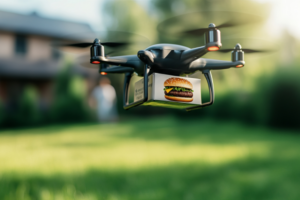
The researchers conducted a self-administered online survey targeting adults who had used AI in hospitality or tourism within the past 18 months. AI technologies included chatbots, virtual assistants, robots, autonomous vehicles, and AI-enabled VR and AR experiences.
Participants were recruited through a panel provider and screened to ensure relevance. After data cleaning, 380 valid responses were analyzed using confirmatory factor analysis and structural equation modeling. The study measured variables such as perceived performance, confirmation, enjoyment, satisfaction, and intention to continue using AI.
WHO THEY ASKED
The sample included a diverse group of U.S. adults. About 54% were male, and 46% female. The majority were aged 36 to 45, and nearly half held a bachelor’s degree. Most participants were married and had household incomes ranging from $75,000 to $150,000. All had used AI in hospitality or tourism settings, making them ideal respondents for exploring post-adoption behaviors.
We wanted to understand not just how AI performs in hospitality, but how it makes people feel—and why that emotional connection drives long-term engagement and continued use.”
THE ENJOYMENT EFFECT
The results were clear: perceived enjoyment significantly influenced satisfaction and future use intentions. Confirmation of expectations also played a strong role, shaping both performance and enjoyment. In turn, performance influenced satisfaction, and satisfaction predicted continued use.
One of the most striking findings was the emotional pathway. Guests who found AI services enjoyable were more likely to be satisfied and to continue using them. This suggests that hedonic value is not just a nice-to-have—it is a strategic asset.
The study also found age-related differences. For older users, confirmation of expectations was more important. For younger users, enjoyment had a stronger impact. This insight points to the need for tailored AI experiences that resonate with different demographics.
SHIFTING THE PARADIGM
According to Huang and colleagues, the findings challenge traditional models of technology adoption. While performance and confirmation remain important, they are not enough. Emotional engagement—especially enjoyment—must be part of the equation.
This shift has implications for how AI services are designed, marketed, and evaluated. It suggests that hospitality providers should focus not only on what AI can do, but on how it makes guests feel. The study’s expanded model offers a more nuanced lens for understanding post-adoption behavior and long-term engagement.
DESIGNING FOR DELIGHT
For practitioners, the message is clear: design AI services that are both useful and enjoyable. Hotels and tourism providers should align promotional messaging with actual capabilities to avoid disappointment. They should also emphasize the fun, interactive, and personalized aspects of AI.
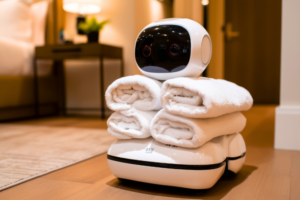
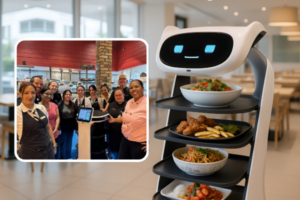
Examples include voice-enabled smart rooms, robotic servers with personality, and chatbots that offer playful banter. These features can enhance perceived enjoyment and drive satisfaction. The study suggests that when guests smile, they stay.
Incorporating both utilitarian and hedonic elements into AI service design can lead to stronger engagement, better reviews, and increased loyalty. It is not just about solving problems—it is about creating memorable experiences.
Enjoyment is not a luxury in AI design—it is essential for crafting guest experiences that resonate emotionally and encourage deeper, lasting engagement with smart hospitality services.”
THE NEXT FRONTIER
This study opens new avenues for research. Future work could explore additional outcomes such as word-of-mouth, willingness to pay, and emotional loyalty. Researchers might also examine generational differences more deeply, comparing digital natives with older users.
Another opportunity lies in analyzing specific AI applications—such as chatbots versus robots—and how their hedonic and utilitarian attributes influence user behavior. As AI continues to evolve, understanding these dynamics will be critical.
Ultimately, the study suggests that the future of AI in hospitality is not just smart—it is joyful. And that may be the key to lasting adoption.