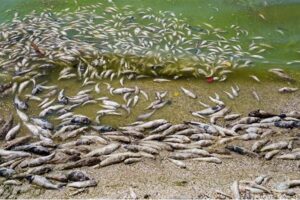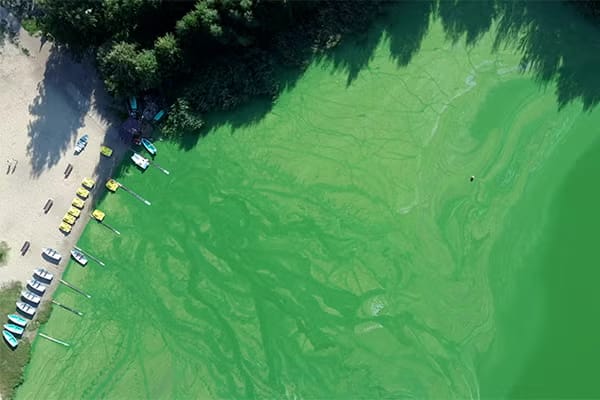
Clean water is important for coastal communities. Not only does it have a direct impact on health and the environment, but it is also critical for tourism and driving local economies. In recent years, warmer temperatures and nutrient pollution have led to an increase in the frequency and severity of eutrophication—a process where a water body becomes overgrown with microscopic plant life as a result of excess nutrients—and harmful algae blooms (HABs). Both eutrophication and HABs are harming tourism and social wellbeing in numerous waterfront communities.
Coastal areas are incredibly diverse and provide a whole suite of ecosystem services that are important at the environmental, economic, social, cultural, and recreational levels for many stakeholders and economic sectors. This includes fisheries, marine transportation and ports, and tourism. Aside from providing a wide range of services, coastal ecosystems also contribute to social wellbeing.
RECREATIONAL WATERWAYS
In Florida, one important ecosystem service that coastal ecosystems provide is the recreational use of waterways and, in particular, services related to recreational boating. Recreational boating is a vital cultural service and a valuable component of ecosystem services more generally in Florida. For example, in 2017, of the 12 million registered recreational boats in the United States, nearly 1 million of them were registered in Florida. HABs lead to site closures which can have negative impacts on recreational boating and the local economy.
Dr. Sergio Alvarez is a natural resource economist at UCF Rosen College of Hospitality Management. His research examines how natural resources and the environment contribute to human wellbeing by focusing on ecosystem services such as food, recreation, and protection from natural and man-made hazards. In a recently published article, Dr. Alvarez and colleagues used a random utility model of recreational boating choices to simulate changes in the value of cultural ecosystem services provided by recreation as a result of HABs in coastal areas in Lee County, Florida. This research provides a valuable insight into the impact that ecological disturbances are having on recreational areas and local economies.
THE IMPACT OF HARMFUL ALGAE BLOOMS IN LEE COUNTY
HABs in Lee County are well understood and originate in the nutrient-rich waters of Lake Okeechobee. From there, they are transported via lake discharges to the Caloosahatchee River, where they then travel to the Gulf of Mexico. Once the blooms transition into saltwater, the bacteria’s cell membranes become compromised, resulting in the death of the cells and the release of cyanotoxins into the water. As a result of this, the blooms that are observed in the Caloosahatchee River tend to dissipate as the river reaches the saltwater of the Gulf of Mexico.
The frequency and severity of these blooms are only expected to increase in the future, which could have devastating impacts on Florida’s tourism industry. Examples of this have already been observed. For example, in 2018 a significant cyanobacteria bloom emerged in Lake Okeechobee, which spread to both the southeast and southwest coasts of Florida via the St. Lucie and Caloosahatchee Rivers, respectively. This significantly impacted local economies and also had negative impacts on both public health and the environment. While the nature of HABs is well understood in Lee County, there is a notable absence of research quantifying the impact of these blooms on tourism and local economies. This study fills an important gap in this research at a time when the frequency of these blooms is only expected to increase.
RANDOM UTILITY MODELS
Dr. Alvarez and colleagues used a random utility model (RUM) of recreational boating choices. They sought to assess how cultural ecosystem services related to recreation might be impacted by prolonged ecological disturbances caused by HABs. RUMs aim to model the choices of individuals from a set of alternatives and can be based on satisfaction or utility. In this type of study, utility refers to the perceived value associated with a particular good or service; this enables the researchers to relate individual preferences to economic costs in order to assign a financial value. In this work, the RUM was used to compute the value of changing site characteristics and this information was then used to estimate the value of access for available recreational boating sites in Lee County.
First, the researchers needed to understand boat users’ choice in selecting areas for recreation. Available boat ramps for accessing waterways in Lee County were identified. Also, the researchers mapped the on-the-water destination sites that are used recreationally. Once identified, the location of the ramps with respect to other ramps was considered and some were aggregated as a single ramp if they were particularly close together, as these would likely be affected similarly by HABs.
In addition, the researchers calculated travel costs to each ramp which took into consideration parameters such as the driving time, launch fee, and bridge fee. While it is assumed that a boater will choose a combination of a launch ramp and on-the-water destination, several factors could impact this choice and these needed to be taken into consideration. For example, the cost of traveling to the ramp and boating to the desired destination, as well as how the boaters view the quality of the recreation site, are all factors that should be considered. The researchers used this information to compute a daily cost in U.S. dollars for each ramp which was then used to estimate welfare losses should the ramp be closed due to HABs.
HABS LEAD TO LARGE ECONOMIC LOSSES
The research by Dr. Alvarez and colleagues demonstrates the impact that ecological disturbances can have on social wellbeing. As predicted, the results from this study demonstrate that the more popular ramps in Lee County have higher per-choice occasion values, which means that the estimated values of these sites were higher than those that were less popular. Boaters were more likely to favor areas that had marine protected zones that were away from navigation aids as well as areas that were close to a ramp. Boaters were also more likely to choose areas that had low travel costs. However, when taking all this into consideration, all sites within Lee County had similar values per trip to the site.
Using this information, the researchers were able to predict the losses caused by HABs under several scenarios by predicting which ramps would be closed as HABs spread and how this would impact boat users’ access. This model was used to estimate the losses that are likely to have occurred during the prolonged period of ecological disturbances caused by HABs in 2018. Using the information from the models, it can be estimated that reduced boating access due to HABs in 2018 may have caused losses of up to $3 million in Lee County alone. While this is a significant loss to local communities, Dr. Alvarez and colleagues point out that this estimate only takes into account the loss of some ecosystem services arising from HABs and does not provide a complete picture. In reality, the losses are likely to be much higher as this estimate only looks at losses experienced by recreational boaters and not all users of the waterways.