THE NEW FRONTLINE: HUMANS, ROBOTS, AND THE ART OF MAKING THINGS RIGHT
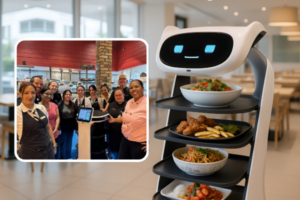
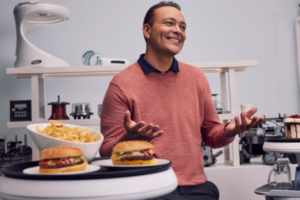
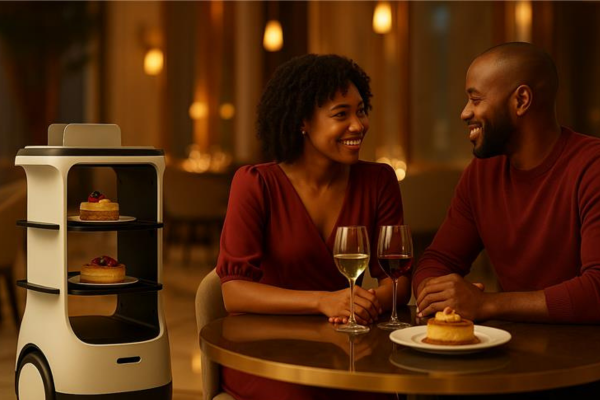
Picture this: a robot named Pepbot delivers your dinner at a trendy restaurant—but it is the wrong order. What happens next? Does a human step in to apologize? Does the robot offer a discount? Or do both work together to make things right? As service robots become more common in hospitality, these questions are no longer hypothetical. They are central to how brands manage customer relationships in a tech-driven world.
This study explores the emotional and behavioral dynamics of service recovery when robots are part of the frontline team. Drawing on theories of technology infusion and social exchange, Nguyen and colleagues examine how different combinations of human–robot collaboration and apology styles affect customer comfort, continued robot usage, and loyalty to the service firm. Their findings challenge long-held assumptions about empathy, compensation, and the role of emotion in hospitality recovery strategies.
In a world where robots are increasingly responsible for guest interactions, understanding how to recover from their mistakes is essential. The study reveals that the way an apology is delivered—and by whom—can make or break the customer experience. Whether it is a robot offering a refund or a human expressing empathy, the emotional tone of the recovery matters just as much as the solution itself.
TECH MEETS TOUCH: REDEFINING SERVICE RECOVERY
Service recovery has traditionally relied on human empathy, verbal apologies, and emotional connection. But as robots take on more frontline roles, hospitality leaders must rethink how recovery works. Can a robot say sorry? Should it offer compensation? Does a human need to be involved to make the apology feel sincere?
To answer these questions, the researchers build on two key frameworks: the Frontline Service Technology (FST) model and the Customer–Automated–Worker (CAW) model. They test three collaboration configurations—high human–low robot, low human–high robot, and high human–high robot—and two apology styles: social (empathy and explanation) and economic (compensation).
Previous studies have shown mixed results. Some suggest that humans are better at recovery because they can express genuine emotion. Others argue that socially intelligent robots can deliver apologies that feel warm and competent. This study bridges those perspectives, asking not just who should apologize, but how—and what emotional and behavioral outcomes follow.
The researchers propose that the effectiveness of an apology depends on the alignment between the agent delivering it and the style used. Robots may be better suited to economic apologies, while humans excel at social ones. This insight has profound implications for how hospitality brands design recovery protocols in environments where technology and human service intersect.
SCENARIOS, SORRIES, AND STATISTICS
To test their hypotheses, the researchers conducted a scenario-based experiment with 311 participants recruited via Amazon Mechanical Turk. Each participant was randomly assigned to one of six conditions, combining different levels of human–robot collaboration and apology styles.
The scenario involved a robot named Pepbot delivering the wrong meal at a restaurant. Depending on the condition, the recovery effort included either a human or robot apology—or both—with either a social or economic tone. Participants then rated their emotional responses, willingness to continue using robots, and loyalty to the service firm.
The researchers measured comfort emotions (such as warmth, safety, and ease), robot continuance usage, and behavioral intentions. They controlled for factors like failure severity, blame attribution, and coping strategies. Data was analyzed using MANCOVA and PROCESS Macro Model 6, allowing for a nuanced understanding of how different recovery strategies influence customer behavior.
This experimental design allowed the team to isolate the effects of apology style and agent type, offering clear insights into what works—and what does not—when recovering from robot-led service failures.
DIVERSE DINERS, REAL EMOTIONS
Participants were adults who had interacted with service robots in public settings within the past six months. While the sample skewed male (74%) and White/Caucasian (87%), with most aged 25–34 and holding a bachelor’s degree, the data still provided valuable insights into how real customers respond to robot-led service failures.
Despite demographic limitations, the study captured authentic emotional reactions to service recovery scenarios. Participants were asked to imagine themselves in the situation and respond as they would in real life. This approach ensured that the findings reflected genuine customer sentiments, not abstract opinions.
The diversity of robot experiences among participants—from hotel check-ins to airport kiosks—added depth to the analysis. It showed that customers are increasingly familiar with robotic service and have formed expectations about how these machines should behave when things go wrong.
We found that comfort emotions—not just robot usage—are the missing link between recovery strategy and customer loyalty.”
THE RIGHT APOLOGY DEPENDS ON WHO’S TALKING
The study’s findings reveal a clear pattern: robot-led recoveries paired with economic apologies yielded the highest behavioral intentions. Customers responded positively when robots took the lead and offered tangible compensation, such as discounts or vouchers. These apologies felt fair and appropriate, especially when the robot was perceived as responsible for the error.
In contrast, human-involved recoveries benefited more from social apologies. When a human expressed empathy and explained the mistake, customers felt emotionally reassured. This type of apology was most effective when the human was seen as a caring agent, capable of understanding and addressing the customer’s feelings.
Comfort emotions played a pivotal role in shaping loyalty. When customers felt safe, understood, and emotionally supported, they were more likely to forgive the failure and remain loyal to the brand. Interestingly, robot continuance usage alone did not predict loyalty. It was the emotional experience—how the apology felt—that made the difference.
The most effective recovery strategies involved either strong robot leadership with economic apologies or balanced human–robot teamwork. These configurations challenged the assumption that humans are always better at saying sorry, showing that robots can be powerful agents of recovery when designed and deployed thoughtfully.
Economic apologies work best when robots lead, but human empathy makes social apologies shine.”
EMPATHY BY DESIGN: WHY ROBOTS CAN WIN HEARTS
According to Nguyen and colleagues, robots are not just tools—they are social agents capable of influencing emotions and loyalty. When robots lead recovery and offer compensation, customers feel treated fairly. When humans are involved, emotional sincerity matters more.
Comfort emotions—feelings of warmth, safety, and ease—are the missing link between recovery strategy and customer retention. These emotions mediate the relationship between apology style and loyalty, showing that technical fixes alone are not enough. Customers need to feel emotionally reassured to forgive and return.
The study suggests that hospitality brands must design recovery strategies that balance functional efficiency with emotional intelligence. Robots should be programmed to recognize emotional cues and respond appropriately. Humans should be trained to deliver empathetic messages that align with the robot’s actions.
This approach requires collaboration between developers, designers, and hospitality managers. It is not just about building smarter robots—it is about creating emotionally intelligent service ecosystems where technology and humanity work together to make things right.
BEYOND THE FIRST IMPRESSION: LONG-TERM TRUST IN ROBOTIC SERVICE
This study opens the door to deeper exploration of human–robot collaboration in service recovery. Future research should examine how cultural and gender differences influence emotional responses to robot apologies. Do customers in collectivist cultures prefer human involvement? Are women more sensitive to emotional sincerity?
Researchers should also test other types of service failures—beyond restaurant scenarios—to see how recovery strategies perform in hotels, airports, and healthcare settings. Longitudinal studies could track how comfort emotions and robot usage evolve over time, revealing patterns in customer trust and loyalty.
As robots become more autonomous and socially intelligent, understanding the emotional nuances of their interactions will be key to sustaining customer relationships. Hospitality brands must move beyond novelty and efficiency, focusing instead on emotional design, trust-building, and long-term engagement.
The future of service recovery is not just about fixing mistakes—it is about making customers feel heard, valued, and cared for. Whether the apology comes from a robot or a human, it must resonate emotionally to truly restore the relationship.