THE HUMAN SIDE OF AUTOMATION: WHY THIS RESEARCH MATTERS
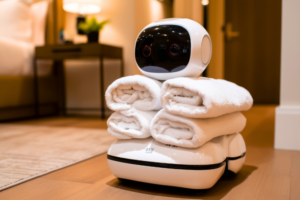
In the wake of the pandemic, restaurants across the United States faced a labor crisis. With fewer workers and rising demand, many turned to service robots to fill the gap. But what happens when technology enters the dining room—not just as a tool, but as a teammate? This study dives into the lived experiences of restaurant employees who work alongside service robots. Conducted by researchers at the University of Central Florida, the project explores how robot adoption affects worker well-being, job performance, and emotional responses. Drawing on frameworks from the National Institute for Occupational Safety and Health, SERVQUAL, and technology acceptance models, the study offers a rare glimpse into the frontline realities of tech-driven hospitality.
The findings are both hopeful and cautionary. While robots can reduce physical strain and enhance customer engagement, they also introduce new challenges. These include technical glitches, lack of training, and emotional discomfort. For hospitality leaders, the message is clear: successful robot integration requires empathy, transparency, and support.
FROM THEORY TO TABLE: FRAMING THE RESEARCH
The study builds on three key frameworks to understand the impact of service robots on restaurant workers. The Future of Work Framework from NIOSH emphasizes the intersection of work, workplace, and workforce, highlighting how emerging technologies affect vulnerable populations. SERVQUAL provides a lens for evaluating service quality, adapted here to assess how workers perceive robot reliability, responsiveness, and empathy. Technology Acceptance Models explore how perceived usefulness and ease of use shape attitudes toward new technologies.
Previous research has focused primarily on customer reactions to robots. This study shifts the spotlight to employees, asking how workers feel about robot adoption, what support they need, and how robot use affects their physical and emotional well-being. By combining qualitative interviews with thematic analysis, the researchers uncover six core themes: collaboration, optimization, integration, engagement, workforce effects, and resentment. These themes reveal a nuanced picture of how robots are reshaping the dining room—not just operationally, but emotionally.
INSIDE THE INTERVIEWS: HOW THE STUDY WAS DONE
The researchers conducted semi-structured interviews with 42 restaurant workers from two organizations: a regional restaurant chain and a senior living community with full-service dining. Participants included servers, bartenders, cooks, managers, and delivery staff, offering a diverse range of perspectives. Interviews were conducted in English and Spanish, professionally transcribed, and analyzed using qualitative software. The coding process drew on constructs from NIOSH, SERVQUAL, TAM, and UTAUT, with additional grounded codes added to capture emergent themes.
Participants had an average of ten years in the hospitality industry and nearly one year of experience working with service robots. Their responses generated over 1,300 coded segments, clustered into six overarching themes that reflect the multifaceted impact of robot adoption on the dining room floor.
VOICES FROM THE FLOOR: WHAT WORKERS REALLY THINK
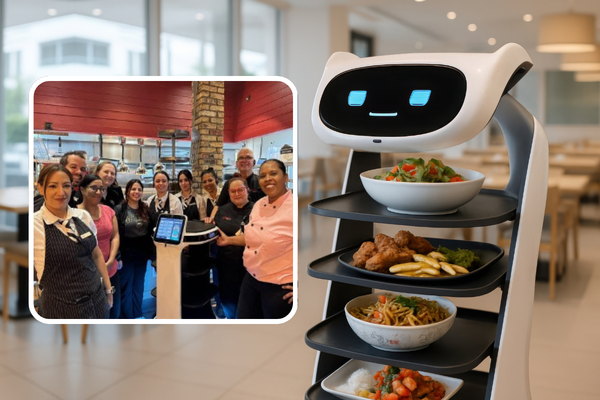
The most prominent theme was service robot collaboration, highlighting how employees and customers interact with robots. Workers appreciated the robot’s ability to carry heavy trays, reduce physical strain, and entertain guests. Some described the robot as a helpful tool, while others saw it as a competitor. Service robot optimization focused on process improvements. Workers suggested better mapping, faster movement, and more intuitive interfaces. Frustrations included slow speeds, technical glitches, and limited functionality, especially during busy shifts.
Service robot integration revealed mixed feelings about productivity and training. While some workers found the robot intuitive, others felt blindsided by its arrival and unsupported by management. Lack of training led to confusion and inefficiencies, underscoring the need for structured onboarding. Service robot engagement captured moments of joy and novelty. Guests took selfies, children were delighted, and some workers felt proud to be early adopters. These positive experiences boosted morale and customer satisfaction.
Service robot workforce effects explored how robots influenced job roles and well-being. Younger workers embraced the technology, while older employees feared job loss. Despite mixed feelings, most agreed that robots reduced physical exertion and stress. Finally, service robot resentment exposed deeper emotional responses. Some workers felt dread, anger, and frustration, especially when robots malfunctioned or disrupted workflows. Others observed changes in coworkers’ behavior, from increased happiness to growing discontent.
Workers appreciated the physical relief robots provided, but voiced frustration when training and support were missing.”
EMOTIONS IN MOTION: INTERPRETING THE FINDINGS
According to Mejia and her team, service robots are more than machines. They are catalysts for emotional and organizational change. The study reveals that workers’ reactions are shaped not just by the robot’s performance, but by how it is introduced, supported, and integrated into daily routines. Comfort and control matter. When workers feel physically supported and emotionally respected, they are more likely to accept robot adoption. But when robots are imposed without training or explanation, resentment builds.
The study also highlights generational differences, with younger workers more open to change and older workers more skeptical. Importantly, the research shows that robot adoption is not a one-size-fits-all solution. Success depends on context, communication, and collaboration. Hospitality leaders must listen to their teams, adapt workflows, and ensure that technology enhances—not replaces—the human touch.
FROM INSIGHT TO ACTION: PRACTICAL IMPLICATIONS
For hospitality managers, this study offers clear guidance. Communicating early and often is essential. Workers want to know why robots are being introduced and how they will affect their roles. Investing in training is critical. Structured onboarding and ongoing support are essential for successful integration. Inviting feedback is equally important. Employees have valuable insights into how robots can be optimized for real-world conditions.
Respecting emotional responses is key. Not all workers will embrace robots immediately. Allowing time for adjustment and offering alternatives when possible can ease the transition. Celebrating the wins helps build momentum. Highlighting how robots reduce physical strain, improve safety, and enhance customer engagement can foster a sense of pride and ownership. Ultimately, robot adoption should be a partnership, not a mandate. By involving workers in the process, hospitality leaders can build trust, improve service quality, and support employee well-being.
Successful robot adoption depends on empathy, transparency, and collaboration—not just technical performance.”
LOOKING AHEAD: FUTURE OPPORTUNITIES
This study lays the groundwork for future research on service robot adoption in hospitality. Key areas for exploration include cultural and generational differences in attitudes toward robots. Longitudinal studies could track how worker perceptions evolve over time as robots become more common. Quantitative validation of the themes identified here could provide broader insights across larger samples. Cross-industry comparisons may reveal how robot adoption experiences differ in hotels, airports, and healthcare settings.
As robots become a fixture in service environments, understanding their impact on workers will be critical. This study reminds us that technology is not neutral. It shapes emotions, relationships, and organizational culture. The future of hospitality depends not just on innovation, but on inclusion.
This study was supported by grant number T42OH008438, funded by the National Institute for Occupational Safety and Health (NIOSH) under the Centers for Disease Control and Prevention (CDC). Its contents are solely the responsibility of the authors and do not necessarily represent the official views of the NIOSH or CDC or the Department of Health and Human Services.