Since the early 1980s, the hotel and airline industries have used dynamic pricing to improve their inventory control and increase their profits. Dynamic pricing involves changing the price of a product or service at various times, points of sale, or for different segments of the market. Also known as revenue management and yield management, dynamic pricing was initially practiced by retailers to cope with the challenges of managing their stock of perishable goods, with price changes driven by inventory and expiration dates.
DYNAMIC PRICING IN TOURISM AND HOSPITALITY
Hospitality and tourism are among many economic sectors employing dynamic pricing to maximize their revenues. Although the services marketed by hospitality and tourism businesses differ from physical goods, hotel rooms, airline seats, and cruise cabins can still be considered perishable with expiration dates, and if left unsold, are described as losses. Factors including variable demand, perishable inventory, advanced reservations, fixed capacity, and various market segments influence revenue management.
Technological advances enable businesses to collect their customers’ data and analyze it to accurately predict what prices their customers are willing to pay and implement price changes accordingly.
Over the past twenty years, several successful applications of dynamic pricing strategies have inspired research studies investigating the impact of these tactics on consumer perceptions and behavior. These include how customers perceive price fairness, their willingness to purchase, and how these strategies affect their trust and satisfaction. While some studies have explored how dynamic pricing affects various tourism and hospitality businesses, its impact on the theme park industry has been ignored until now.
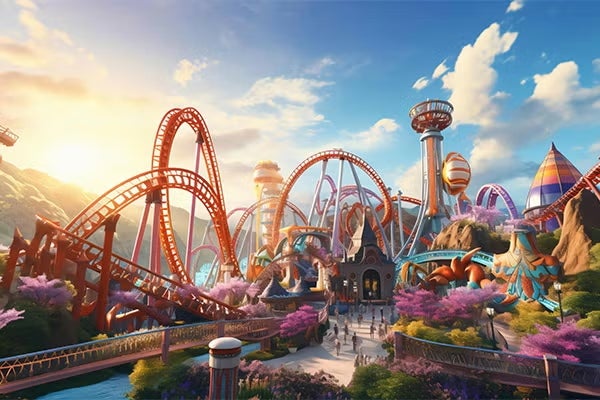
To increase their earnings, many theme parks employ dynamic pricing strategies. UCF Rosen College of Hospitality Management Professors Ady Milman and Asli D.A. Tasci explain the impact of dynamic admission prices on theme park visitors’ behavior. They assess consumer trust, brand loyalty, and perceived value under six different pricing conditions. These include scenarios when guests are aware and unaware that they are paying more or less than other customers.
MANAGING PRICES IN THEME PARKS
Dynamic pricing has been adopted by theme parks to improve revenue and manage crowds by persuading consumers to swap their visits from busy crowded days to less-crowded ones, so visitors aren’t turned away. For instance, Disney launched a type of dynamic pricing for its parks in 2018, when they offered ‘value’, ‘regular’, and ‘peak’ prices that depended on three categories of dates.
The researchers used a cross-sectional survey design to explore consumers’ attitudes toward various dynamic pricing strategies employed in theme parks. They designed a structured survey with a screening question to find participants who had visited a theme park within the last year. Respondents were given a list of North America’s most popular theme parks and asked to indicate all the theme parks that they have visited, and then pick out the last one they had visited. Participants were asked how many times and at what time of year they usually visit theme parks within a twelve-month period.
DYNAMIC PRICING STRATEGIES
Respondents were then randomly assigned to 6 scenarios. The first scenario was a control scenario with no dynamic pricing. Scenarios 2 to 6 involved different dynamic pricing strategies. Participants allocated to scenario 2 were aware that they were paying a different price to some other visitors, but they did not know if their prices were higher or lower than others. In scenario 3, visitors knew that they were paying less than some other customers. Those allocated to scenario 4 knew that they were paying more than some other visitors. In scenario 5, customers knew that they were paying more than some other visitors, but part of the extra payment was going to a charity. Those assigned to scenario 6 knew that they were paying more than some others to support sustainability efforts such as refillable water bottles, sustainably sourced food, environmentally friendly containers, fair-trade products, waste management, recycling, and water conservation on site.
Participants were asked to imagine that they were visiting their last theme park again with their families and asked to answer the remaining questions based on their knowledge of the pricing strategies in their given scenarios. They were asked to rate their trust, perceived value, and brand loyalty on a 7-point agreement scale, with 1 = strongly disagree and 7 = strongly agree. They were also invited to rate their acceptance of the various pricing strategies that theme parks use with 1 = extremely unacceptable and 7 = extremely acceptable. The questionnaire concluded with some sociodemographic questions regarding their age, gender, state of residence, level of education, annual household income, marital status, the number of children under 18 in the household, and ethnicity.
The researchers aimed to have 50 respondents for each of the six scenarios. Following data cleaning, the study had 286 valid surveys with between 47 and 49 respondents per scenario. They analyzed the data using SPSS software to generate frequencies, descriptive statistics, a one-way ANOVA test, and a chi-square test. Respondent characteristics were consistent with industry data showing a steady increase in the number of millennials visiting theme parks.
PARTICIPANT PROFILES
Participants were grouped by scenario and the average age for each group ranged from 32 to 38 years. There were more males than females in each group and more than half of the respondents had a college or university degree. Approximately half of the respondents were married. Between a quarter and a third of all participants had children under 18, averaging 1 or 2 children per household. More than half of the participants had an annual income between $35,000 and $75,000. Nearly three-quarters of the respondents in each group were White.
The most popular theme parks visited were Florida’s four Disney theme parks, California’s two Disney theme parks, and Universal Studios Florida. The respondents’ last theme park participants visited in the past year included Disneyland in California, Disney’s Animal Kingdom in Florida, Universal Studios Florida, SeaWorld in Orlando, and Busch Gardens in Virginia. In all groups, the respondents’ theme park visits corresponded with reported U.S. theme park annual visitation patterns.
TRUST, VALUE, AND BRAND LOYALTY
Consumers paying less for admission tickets had more trust than those paying more. Across the six groups, brand trust was highest when there was no dynamic pricing employed (scenario 1), and lowest when customers knew that they were paying more than others (scenario 4). Introducing charity and sustainability factors resulted in slight increases in consumers’ level of trust.
Consumers paying less saw more value than those paying more. Moreover, it appears that the participants’ perceived emotional, financial, and reputational values were highest in scenario 1, when dynamic pricing was not used, but social value was highest in scenario 3 when customers knew that they were paying less. All four perceived values were lowest in scenario 4 when consumers knew that they were paying more. Consumers paying less had greater intentions to recommend and revisit the parks than those paying more, although they were not willing to pay any more. Visitors’ reactions to paying premium prices showed little change when they knew that the premium went towards charitable causes or sustainability.
WHEN IS DYNAMIC PRICING ACCEPTABLE?
Overall, participants displayed the best positive attitudes and loyalty when they knew that they were paying less than some other customers. They thought that charging lower admission for in-state residents, frequent visitors, and off-season visitors was highly acceptable. Conversely, charging these visitors more was seen as acceptable if part of their payment was contributed to charity. Some consumers choose to visit theme parks at times such as national vacations when admission prices are higher, but they are unlikely to approve of the dynamic pricing strategies that increase the cost of their visits.
While decision-makers are aware of the negative effects of dynamic pricing strategies, they use these strategies to control peak-time attendance and to improve visitor experience. However, consumers may have resentment due to what they perceive to be unfair policy. Loyal customers feel that they should be paying lower prices, but many theme parks are practicing the opposite. Professors Milman and Tasci recommend that these businesses consider strategies to avoid consumer bitterness, such as advertising their involvement with charities and sustainability and offering transparent reasons for their dynamic pricing policies.