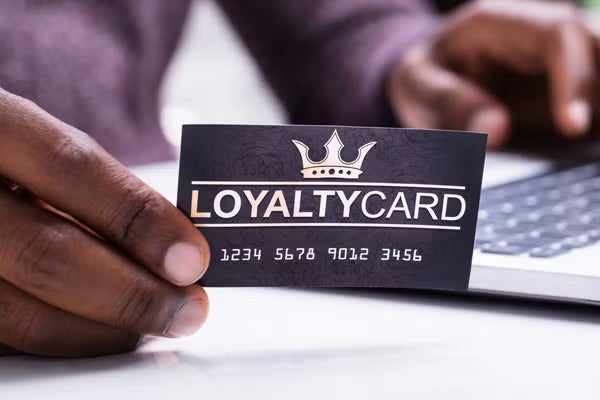
It’s about forty years since the first loyalty schemes were launched as a proactive marketing tool to keep customers coming back and to try and stop them falling into the clutches of the competition.
Airlines and retail chains were among the first to realize the benefits of building the patronage of existing customers and tying them in through direct offers and rewards. Coincident with this was the rapid development of computer systems that could capture almost priceless information about of loyalty schemes and loyalty cards that they leverage to get the best deal possible.
The question inevitably arises: do loyalty schemes still impact positively on business performance? Dr. Nan Hua and Dr. Wei Wei of the Rosen College of Hospitality Management and colleagues asked that question from the perspective of the hotel industry.
Today, most hotels will offer a loyalty scheme in one guise or another, and as of 2015, the major hotel groups had built up a combined membership of some 300 million members.
However, the growth of such membership does not necessarily translate into additional activity. The La Quinta group, for example, had 11 million members by 2015, but only 25.5% of them were active members. That apparent contradiction has led Dr. Hua, Dr. Wei and their collaborators to pose the following research question: Do loyalty programs positively impact hotel operational and financial performance?
THE BENEFITS OF LOYALTY
The perceived benefits, from the hotel perspective, of encouraging customer loyalty are relatively straightforward. Not only do customers tend to return or repurchase, which generates direct profit, but that also reduces the hotel’s need to keep attracting new customers, thus reducing the expense of marketing communications.
Loyal customers tend to stay with one brand and build a valuable emotional commitment to it, but that alone is not enough; increasingly, the measure being used is share of wallet – the percentage of a customer’s total spending within a category that is captured by a given brand. Customer loyalty doesn’t deliver competitive advantage if the customer is just as loyal to the competition.
The third benefit of loyalty is that loyal customers tend to be less price-sensitive, willing to pay a premium for the products and services provided, which increases the financial yield from each visit.
The fourth benefit is that happy, loyal customers tend to spread positive word of mouth (WOM), both directly and through the incredibly powerful channels of social media, with the customer becoming a valuable brand ambassador.
RETURN ON INVESTMENT
However, whether those theoretical benefits are enough to justify the cost of setting up and running the loyalty program is still not clear, even from the research that has been carried out to date.
Only a fearless brand would rely on customer loyalty and word of mouth alone to provide future revenues, and loyalty programs tend to be part of a broad mix of marketing communication channels and choices. The old advertising adage that ‘I know half the money I spend on advertising is wasted; the trouble is, I don’t know which half’ (usually attributed to John Wannamaker, an American merchant famous in the early part of the last century) is almost as true today.
So, how can the hotel industry determine whether loyalty programs pay their way, or are they part of the ‘wasted half’ of the marketing budget?
In their literature review, the research team found that there are contradictory messages from previous studies. On the positive side, there is evidence that customer loyalty increases the perceived switching costs in the mind of the customer and that, overall, loyalty program expense contributed significantly to growing hotel profit.
On the other hand, other studies were not so optimistic. The high cost of trying to make the hotel meet the exact needs of a vast range of customer types and their specific needs and interests is cited as a significant challenge to any return on investment achieved.
They also identify that loyalty schemes are straightforward to copy but very hard to differentiate, which leads directly to the need to develop a much better understanding of the contextual factors at play in the type, magnitude, and timing of rewards offered by loyalty programs and how those are perceived by customers.
The research team identified six contextual factors:
• Franchise expense
• E-commerce expense
•Advertising expense
• Other marketing expenses
• Size of the hotel (i.e., number of guest rooms)
• Hotel chain scale (i.e., luxury, upper upscale, upscale, upper midscale, midscale and economy)
The team concluded these factors could affect the impact loyalty program expenses have on the profitability of a hotel brand or an individual property and should, therefore, be factored in as control variables. Taking their initial question (Do loyalty programs positively impact hotel operational and financial performance?), they looked at operational and financial performance separately.
The researchers used a large sample of performance data from 2,120 hotel properties in the period 2011 to 2013, which included the following key performance measures:
• Occupancy – the percentage of available rooms occupied
•ADR – average daily rate • RevPAR – revenue per available room
• GOP – gross operating profit
The study design had its challenges. The team had to avoid potential heteroscedasticity (where the variability of a variable is unequal across the range of values of a second variable that predicts it), autocorrelation (which measures the linear relationship between lagged values of a time series) and simultaneity issues (where the explanatory variable is jointly determined with the dependent variable). To avoid these possible pitfalls, the team used the instrumental variable technique.
CONCLUSION
The findings showed that loyalty program expenses had a significant and positive impact on all three operational performance indicators; RevPAR, ADR, and occupancy, as well as a positive effect on hotel GOP, even allowing for the potential impact of hotel location.
One of the benefits of this study, compared to previous investigations into the benefits (or not) of loyalty programs, was that the outcomes are based on methodology that controlled the series of other expenses, identified earlier, including franchise expenses, e-commerce expenses, advertising, and other marketing expenses.
However, Dr. Hua, Dr. Wei and colleagues do recommend caution when interpreting these results, given that some potential variables may have been omitted, and the fact that the market environment is continuously changing.
Instead, their recommendation is for further research into a range of factors. Among these is the degree to which individuals sign up to multiple loyalty schemes in the same service sector, and also the degree to which, although the results of this study were favorable to the contribution of loyalty schemes, that contribution may be declining due to the overabundance in the market. They also note that this study was working with secondary data and that a deeper understanding of the issues could come from qualitative and quantitative primary research.
For the hotel industry, research like that carried out by Rosen College’s researchers is helping to provide much-needed clarity.