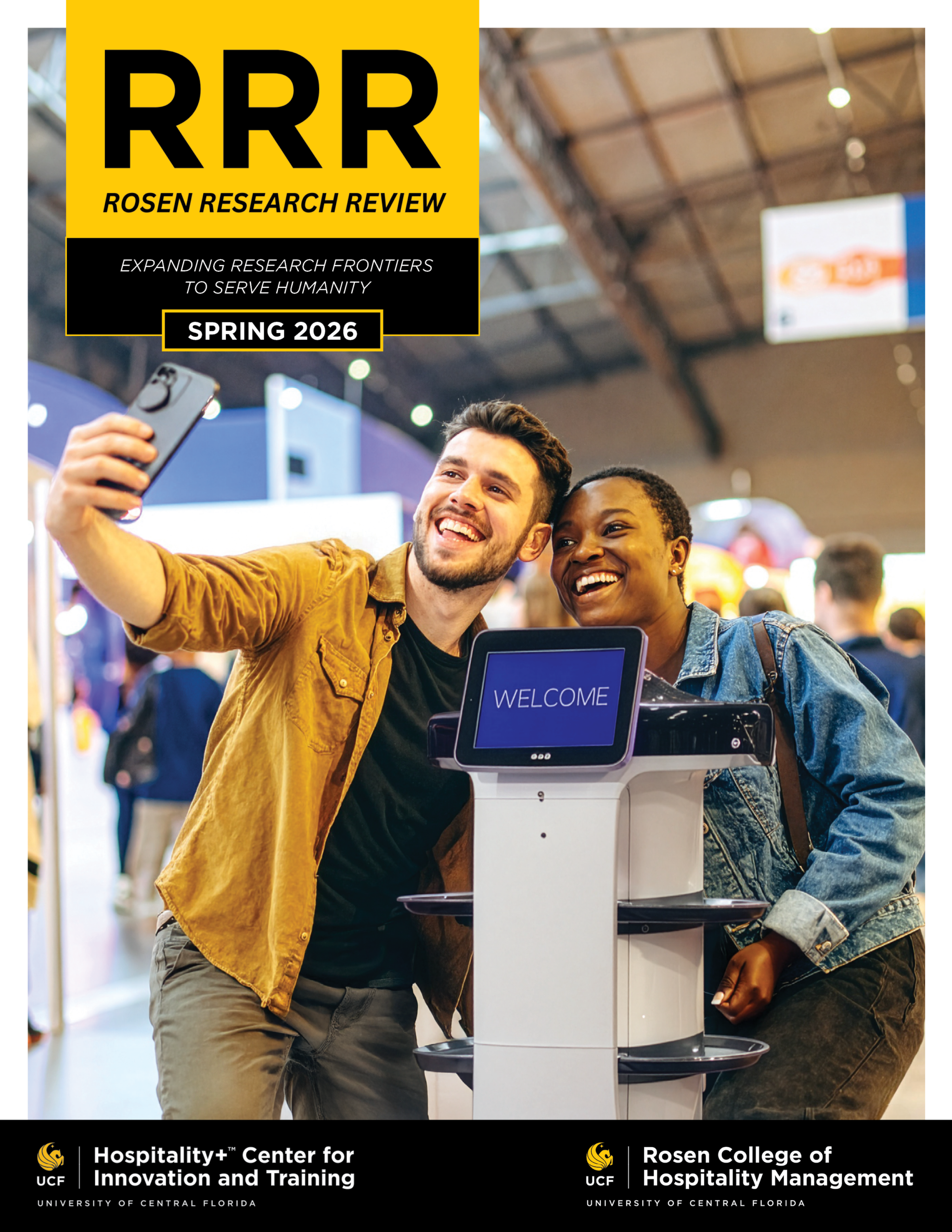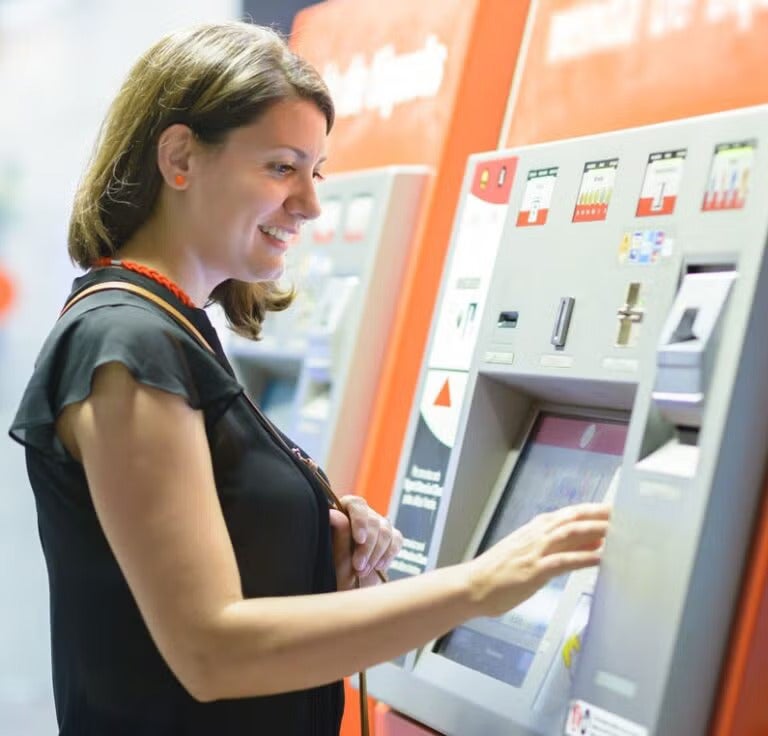
We are all well used to self-service technologies (SSTs) within banking in terms of service tills and deposit machines and within retail with self-checkout. Less familiar is the rise in such technology within the hospitality industry where, for example, such devices can enable consumers to check in and out or order food for themselves. The aim? To make the process much faster and easier for guests.
As consumers, we are guided by both intrinsic and extrinsic motivations when making decisions. Extrinsic refers to the functional, and therefore tangible, factors involved. For example, we might choose a particular product because it will save us time. And as Kokkinou and Cranage (2015) found, in the hospitality industry, “consumers were more likely to embrace SSTs, as the waiting time for a service associate became longer”. Intrinsic motivations are slightly more complex in that they relate to the emotional, and therefore intangible, benefits. Perhaps we make a decision based on social image, or emotional value, because it will satisfy our curiosity or is relevant to the particular situation we are in. When it comes to the use of SSTs in a hospitality context, the Rosen researchers argued, this distinction is key. Consumers, they suggested, respond differently to both intrinsic and extrinsic attributes of SSTs.
THE TRANSCENDENT SERVICE EXPERIENCE
When a customer interacts with an SST such as to order food via a tablet device in a restaurant – this has the ability to empower and engage a customer and so enhance their experience. In so doing, this creates an opportunity for businesses to “capitalise on consumer experience (Bill Xu and Chan, 2010) by deliberately designing engaging experiences and creating memorable events that could generate economic value (Pine and Gilmore, 1998)”, cite Wei, Torres and Hua. Schouten et al. (2007) label this “the transcendent customer experience (TCE)”. The researchers wanted to ‘reflect the service context’ of their study and so used the modified term ‘transcendent service experience’ (TSE). Because a TSE relates to a ‘peak’ experience, the researchers used it in the context of discovering the most memorable service experience.
Using an SST not only provides functionality to a consumer; it can also enhance service experience. SSTs can elicit emotional responses, create positive recollections and offer a unique experience. All of these are opportunities for businesses to leverage a competitive edge. For this reason, Wei, Torres and Hua are clear: the question for the hotel industry is now no longer whether to adopt SSTs but instead the focus is on how to use them to create a TSE.
The study identified that both extrinsic and intrinsic attributes impact the success of an SST, while the lure of saving time and offering convenience – extrinsic values – are key consumer satisfaction drivers. As such, extrinsic attributes have a greater role to play when evaluating the consumer satisfaction level of using an SST.
The research also found that intrinsic benefits have a more significant impact on consumers’ views of SSTs than previously thought. However, the team explain that, while the “impact of the intrinsic attributes of SSTs on satisfaction with SSTs was found to be positive and significant in a restaurant setting, such impact in a hotel setting was positive and insignificant”. Therefore, extrinsic factors are the driving force behind consumer satisfaction with SSTs.
INFLUENCING TSE
Interestingly, however, the research also highlights that, in terms of TSE, customers are much more swayed by intrinsic attributes while, conversely, extrinsic values have a negative impact. The researchers attribute the likely rationale for this to two possibilities:
1. Consumers are becoming familiar with the convenience and time saving factors associated with SSTs. Rather than making an experience memorable, such extrinsic attributes have instead become an expected (and mundane) part of the experience.
2. TSE involves the creation of a memorable, unique experience. So, the intrinsic aspects of the experience therefore become more important. As the team explains: “The extrinsic attributes associated with SSTs are utilitarian in nature, thus are likely to provide the wrong benefits for those who are seeking TSE.”
IMPLICATIONS FOR INDUSTRY
The research highlights how the hospitality sector can enhance a customer’s overall satisfaction by ensuring an SST is closely aligned to a customer’s needs, giving a much more personalized experience and contributing to TSE. As the authors point out, the main question for businesses is how – and not whether – “to best leverage SSTs to create a better customer experience”.
Furthermore, due to the already identified negative influence of SSTs’ extrinsic attributes for hotel guests’ TSE, the hospitality industry may be better served by improving “the uniqueness of SSTs’ extrinsic attributes at service encounters”, states the team. For example, a guest could use an SST to ask room service to collect a tray or housekeeping for cleaning services. They could also use an SST to contact a specific manager directly.
In so doing – and by empowering and engaging the customer – the hospitality industry has the tools to create a more personalized experience. As Wei, Torres and Hua cite: “Such service customization was found to further lead to higher customer satisfaction (Ding and Keh, 2016). And by creating SSTs that emphasize entertainment and satisfy customers’ curiosity, managers will have a better chance of staging TSE.” By examining the effect of intrinsic and extrinsic attributes separately, the researchers have been able to give a new insight into the benefits of SST use in the hotel and restaurant industry.