More than 521 million people visited the world’s top ten theme parks in 2019 according to the Themed Entertainment Association (TEA). Headed by the Disney Corporation, which welcomed around 156 million global visitors in the same year, statistical agency IBIS World estimates that the U.S. market alone is worth $29 billion annually.
Theme parks are big business, but they are also places where visitors invest their emotions, share experiences, and make memories. To date, academic research has mainly concentrated on theme park services and attractions. New research led by UCF Rosen College of Hospitality Management’s Associate Professor Wei Wei breaks new ground by using the two concepts of ‘tourist gaze’ and ‘social servicescapes’ to look at what makes a memorable theme park experience.
The ‘tourist gaze’ is a key concept for tourism studies. Identified by sociologist John Urry in the 1990s, it assumes that tourists consume visual experiences along with other, perhaps more tangible, services at tourism or leisure destinations, and that these experiences can both influence visitor satisfaction rates and be influenced by industry providers. A visit to Universal Studios, for example, is in many ways a staged experience similar to a theatrical performance—visitors might even dress as a favorite movie character. When this happens, the visitors ‘spectate’ each other, as well as the attraction.
Also defined in the 1990s, this time by Mary Jo Bitner, the concept of a ‘social servicescape’ is particularly associated with the hospitality industry. According to this model, the physical space in which hospitality services are consumed—and the physical presence of other people who share that space—will also affect consumers. Not only does the staging of the attraction matter, the presence of other people is also important—people want to be surrounded by others who are sharing the same experience.
Published in the prestigious International Journal of Hospitality Management, the research team’s study integrates the concepts of tourist gaze and social servicescapes. It uses the ‘lens’ of the tourist gaze to study how theme park servicescapes affect visitors’ emotions and help to make the experience memorable.
EMOTIONAL SPACE
A preliminary review of antecedent tourism literature identified three important dimensions of social servicescapes, namely visitors’ appearance, behavior, and similarity to each other. Psychological studies also suggested that tourist gaze is strongly related to people’s emotional responses, particularly their feelings of arousal and curiosity. The research team brought these ideas together in a three-stage model to study whether appearance, behavior, and similarity affect visitors’ arousal and curiosity, and in turn create memorable theme park experiences.
Taking a quantitative approach, an online survey was designed and distributed through a leading crowdsourcing website. Conducted in the U.S. in early 2020, participants were asked about a memorable visit to a theme park in the previous six months. Respondents were shown photographs of other visitors’ appearances and behaviors at theme parks to refresh their memories and help them understand the focus of the research. After screening, 561 responses were subsequently analyzed.
Given that a theme park visit can cost hundreds, if not thousands, of dollars, participants’ demographics are important. Respondents were fairly evenly split regarding gender and marital status, and relatively well-educated. The majority identified as white, a third as non-white, and income was fairly evenly distributed, ranging from less than $35,000 a year, to more than $100,000. Some 59% of participants visited with family, and 36% with friends. The most common attractions visited were Disney entertainment resorts, followed by Six Flags adventure parks, Universal Studios movie-themed destinations, and Sea World marine zoological parks.
SOCIAL SERVICESCAPE AND TOURIST GAZE
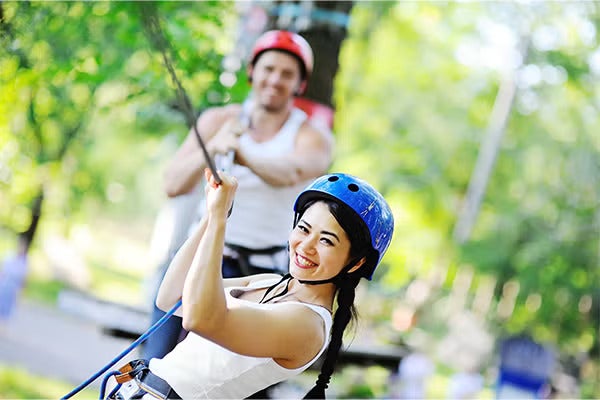
Survey questions on similarity in the social servicescape included whether participants identified with other visitors and looked like they came from a similar background. Appearance questions probed items such as other visitors’ facial and emotional expressions, e.g., whether they looked cheerful. Behavior was tested through such questions as whether other visitors were amusing and enjoyable to watch.
Participants’ levels of arousal in tourist gaze were assessed by asking, for example, whether they found watching others interesting, or stimulating. Curiosity was tested by asking such things as whether they enjoyed learning new things about other visitors from their behaviors and appearances. To judge whether arousal and curiosity have an overall effect on memorable experience, participants were asked, for example, whether they felt revitalized or refreshed by their visit.
What makes a memorable theme park experience? Dr. Wei looks at how visitor experience is influenced by the ‘tourist gaze’—the consumption of visual experiences, as well as other services, in a tourism destination.
Dr. Wei looks at how visitor experience is influenced by the ‘tourist gaze’—the consumption of visual experiences, as well as other services, in a tourism destination.
SOCIAL IDENTITY AND PERFORMANCE
As the researchers expected, the results of the study showed that perceptions of similarity to other visitors positively affected participants’ states of both arousal and curiosity. In line with previous research on social servicescapes and social identity theory, this suggests that consumers’ attitudes in hospitality settings are strongly influenced by their sense of belonging to a recognized social group, which in turn enhances their self-image.
The results also indicated that there was a significant relationship between participants’ observation of other visitors’ behavior and their feelings of both arousal and curiosity. This had also been anticipated by the research team, not least because it is in line with the theatrical performance literature. The research confirms that theme park visitors are spectators of both other people’s behavior, and the performers who help to determine other visitors’ response.
Contrary to the research team’s expectations and to other studies, the results did not suggest that participants’ observation of other visitors’ appearance significantly impacts their feelings of arousal or curiosity. Wei and her collaborators argue that one possible explanation for this is that theme park visitors expect other visitors to look happy, energetic, and cheerful, and that the value of that particular measure is therefore reduced.
The findings confirm that visitors’ affective states of arousal and curiosity are important in helping to create positive memorable theme park experiences. Being aroused and excited, as well as feeling curious and wanting to learn, are recognized by psychologists as drivers of memory—we remember the things and experiences to which we have had an emotional response.
CUSTOMER SEGMENTATION AND BEHAVIOR
By using social servicescape and tourist gaze concepts to determine what makes theme park experiences memorable, Wei and her collaborators bring new insights and widen the scope of the academic literature which had previously concentrated on hospitality settings. In addition, while previous studies have investigated the impact of factors such as aesthetics and education on memorable tourism experiences, the researchers’ study shows that the social servicescape and other visitors are also important.
The study has important implications for theme park operators and managers, not least given the cost of developing new facilities—the Disney Corporation, for example, recently announced that in the next ten years it needed to spend $17 billion to expand its Florida resort.
Wei and the other researchers’ findings imply that the impact of the social servicescape and other visitors on a visitor’s enjoyment of a theme park should not be ignored. In addition, the importance of visitor similarity suggests that marketers should pay particular attention to customer profile and segmentation in order to establish a homogeneous marketing base. Employers should also consider creating themed events to attract visitors who share similar interests, as well as promotions for specific groups, for example, to celebrate.
NATIONAL GRANDPARENTS’ DAY
Other opportunities include management interventions to promote desirable visitor behaviors. This could be through careful scripting of employees’ interactions with visitors in order to elicit specific responses. Photographs and images used in marketing and promotion should also be appropriate to the target customer base. Last but not least, given the study’s findings on the importance of emotions in creating memorable theme park experiences, activities should be designed to be as emotionally engaging as possible.