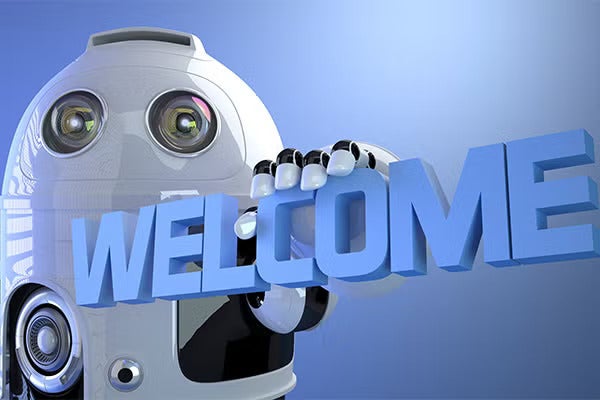
With society experiencing a technological revolution, robots are becoming an increasingly common sight in our everyday lives, including in the tourism and hospitality industry. In North America, theme parks have adopted robotic servers to enhance the experience of visitors, but how do customers perceive robots in this setting? Research in this field is limited, especially in the context of theme parks, and it is not known whether robots enhance the visitor experience, can perform valuable tasks, or if they may even have an impact on visitor loyalty. With the global service robotics market predicted to grow by 21.8% between 2020 and 2026, understanding the impacts of robots on theme park visitors is essential.
A ROBOTIC WORKFORCE
The study of consumer usage and acceptance of robots in tourism and hospitality settings is still in its infancy, but UCF Rosen College of Hospitality Management researchers Dr. Ady Milman and Dr. Asli D.A.Tasci are working to overcome this knowledge gap. The authors conducted an online survey to understand customer reactions to the qualities and functions of robots—all 399 respondents were seasoned theme park visitors who had visited a theme park within the past 12 months and their self-assessed level of technological ‘savviness’ was also recorded.
Each participant was randomly assigned one of four robot types, identified through their important attributes and impacts as anime, cartoon-like, human-like, and animal-like. The participants were asked to imagine a variety of interaction scenarios with the type of robot they had been assigned. Respondents were then tasked with rating perceived robotic qualities including human likeness, similarity to human perception capabilities, emotional range, safety characteristics, and the level of co-experience (shared social experience) they felt. All participants then evaluated the functionality of their particular robot when performing theme park tasks, before measuring their anticipated behaviors in response to the actions proposed by the robot.
The survey results revealed that across the tourism sector, museums and art galleries were the top choices of respondents for incorporating robots to enhance the visitor experience (20.8%), followed by theme parks (18.9%), entertainment and sporting events (9.3%), then zoos and aquariums (9.1%). As theme parks often have accommodations and restaurants, respondents liked seeing robots in both full-service (48.8%) and limited-service hotels (43.2%). For food and beverage venues, respondents preferred to see robots in quick-service restaurants (32.4%) compared to full-service (32.4%) and self-service (22.2%). Overall, however, most participants also commented that they preferred the service of skilled and well-trained staff in restaurants, rather than robots.
HIGH-TECH HOSPITALITY INTERACTIONS
Understanding how customers feel about robotic interactions in different facets of the theme park experience is essential—by 2030, robots are predicted to account for 25% of the hospitality and tourism workforce. Public service robots, particularly those with in-built artificial intelligence (AI), can provide customer service experiences without the same level of operational expense as human staff. This move towards robotic service can be seen in existing tourism and hospitality operations, such as Hilton Hotels using pioneering robotic technology to create Connie, an AI-powered robot that interacts with guests and responds to their queries based on visual and audio recognition functions. At Munich Airport, robot Josie Pepper assists passengers by providing information about restaurants, shops, and flight schedules.
Chatbots are another variation of robotic technology, providing online customer service support through instant messaging functions. Theme park executives may choose to deploy robots in certain areas of their workforce—such as booking, information provision, or others—to improve the visitor experience. However, they should also be aware that robotic services rely on well-developed and serviced systems to ensure that the robots provide an excellent, functional customer experience. As a result, robots are not a complete replacement for a human workforce.
When developing robots for a theme park, executives should keep in mind key parts of the guest experience. These include reducing wait time and the need to interact with employees; ensuring the robots are always available; eliminating human errors through pre-programmed responses; providing useful information and learning experiences; greeting guests and performing storytelling activities; communicating with guests about food, beverages, and merchandise; processing payments accurately; assisting in ticket purchasing; accurately signposting guests within a park to other facilities; and promoting fun and curiosity among all ages. If harnessed appropriately, robots could help to encourage return visits to the theme park by creating a memorable, welcoming, and engaging place to enjoy.
REIMAGINING ROBOT FACES
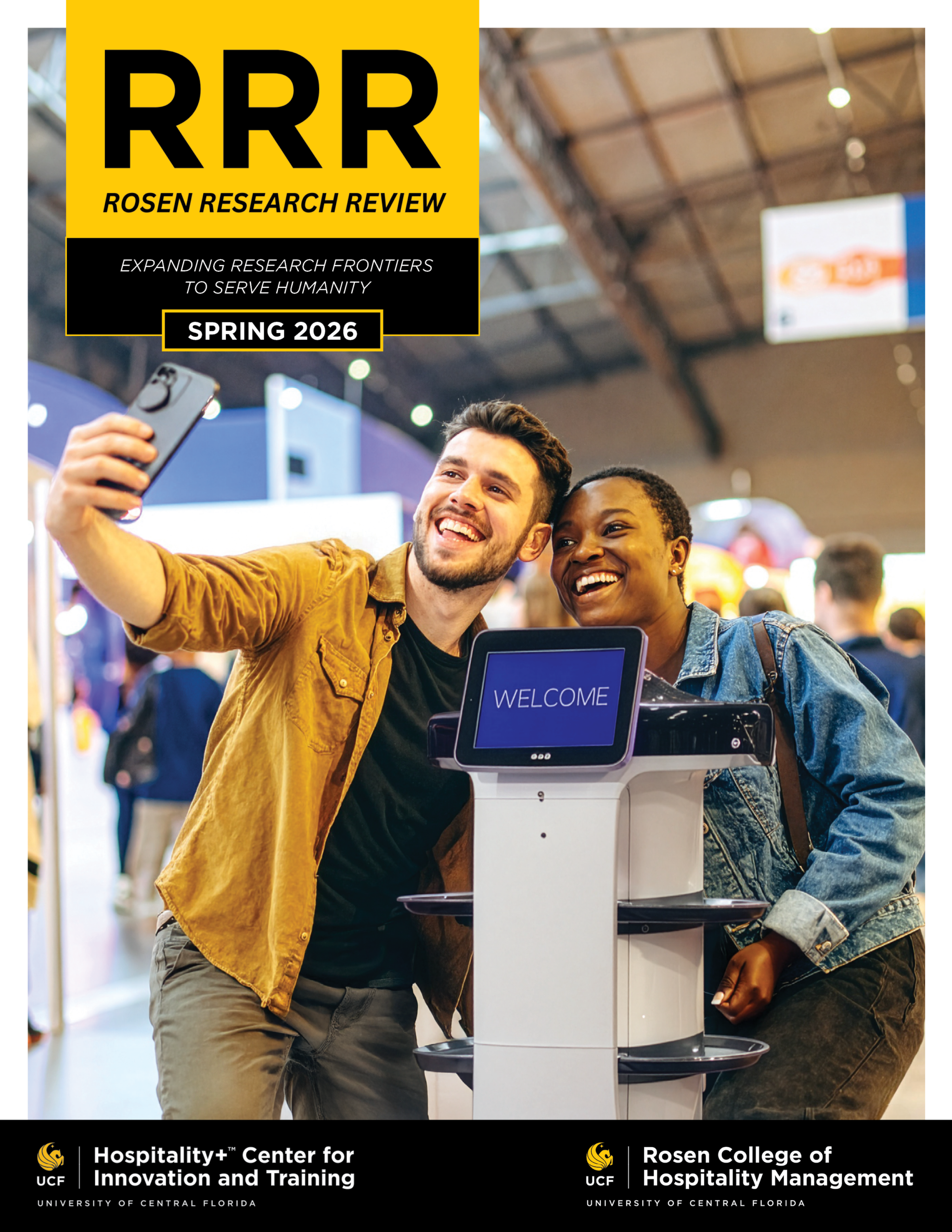
Gaze and stare are key social signals that impact people’s perceptions and ability to interact with another person, or in this case, a robot. Milman and Tasci found that respondents preferred the appearance and perceived emotions of human-like robots, which feeds into our natural tendency to empathize with other humans more than animal or cartoon characters. When used effectively, robots can improve user experience, even generating humorous and entertaining moments. For example, three Smithsonian Institution museums have embraced human-like qualities in their robots, choosing characters with engaging voices and motions, and programming the robots to pose for selfies, play games with guests, and even dance. Theme parks are also incorporating more robotic motions in their rides, with the Walt Disney Company taking this a step further by developing cartoon-like robots that can walk in parades and tell stories to create an engaging and innovative environment for all visitors.
It is important to consider the appropriateness of the robot design for each setting. This novel study revealed that most respondents preferred interactions with robots that display human-like social exchanges and behavior (such as touching or showing emotional reactions) as cartoon robots are associated with children’s movies and toys, which do not always generate human qualities (such as emotions and safety precautions). It is therefore important to carefully consider which of the four robot types would have the greatest impact in individual settings across a theme park, considering both user experience and company branding.
FINE-TUNING CUSTOMER SERVICE
The survey results report no significant differences in the functions that respondents expected all four robot types to perform, and also no difference in how they would respond to the information provided by each type of robot. In essence, as long as the robot was able to complete the required task with speed, accuracy, and cost-effectiveness, the customer was satisfied. This aligns with previous research which found tourists preferred robotic services in busy hospitality settings compared to interactions with human staff as the efficiency of service was increased.
The dynamic interactions that robots can provide to theme park guests should improve communication, information availability, and entertainment value for visitors. This research, therefore, helps theme park executives understand which robotic qualities and functions are well-received by customers, allowing them to adopt the most effective robot types for optimum outcomes. However, theme parks should make sure to balance a robotic and human workforce as introducing robots universally across the hospitality industry could have negative consequences. These may arise from the high expenses of equipment upkeep, the creation of a potential skill shortfall, as well as the changes a robotic workforce would have within an organization’s culture. Nevertheless, robots are seen as an innovative approach to providing customer service and future research can fine-tune their value to the travel, tourism, and hospitality industries by focusing on the robot delivery service, mobility, and interactivity features. The work of Milman and Tasci, therefore, provides a helpful guide toward developing future robot looks, qualities, and functions to generate more interactive environments and experiences within theme parks.