Few sectors were more adversely affected by the COVID-19 pandemic than the hospitality sector.
Hotel rooms remained empty and restaurants and bars closed their doors, some never to open again; others survived by shifting focus to takeaways. For those restaurants that held the line during the lockdown and eventually reopened under strict social distancing guidelines, adjusting the layout and furnishings to provide a safe and enjoyable dining experience was a new frontier, with no available research to guide them. Dr. Wei Wei of the UCF Rosen College of Hospitality Management and collaborators set out to change that.
Restaurant customers have a distinct reaction to the number of people in the space and the distribution of the furnishings. While a busy restaurant suggests it is justifiably popular, too many people can tip the balance into feeling crowded. Similarly, the physical distance between tables will determine whether the dining experience is intimate or invasive. The configuration of a restaurant’s furnishings, its built density, is crucial in determining customers’ enjoyment and, importantly, their intentions to revisit and recommend it—getting the balance right is a science. This is challenging during the normal ebb and flow of customer behavior, but when the COVID-19 pandemic, and the resultant social distancing rules, forced owners to completely rethink how they configured their restaurants, there were no guidelines as to what would make an unusual dining experience enjoyable.
Dr. Wei and her colleagues set out to address this lack of guidance. They aimed to explore how dining experiences were affected by the built density shifts that were necessary to meet social distancing regulations. Their research had two parts: the mediating effect of perceived territoriality—a customer’s assumed personal space—and the moderating effect of a customer’s sense of power, defined as the ‘perception of an asymmetric control over resources in a given social situation.’ Central to their hypothesis was that an adjacent empty table is better than an open space for a more enjoyable dining experience. Current research suggests an empty restaurant table serves as a ‘fence,’ symbolically imparting territorial rights to that table as well as a customer’s own. Remove the empty table, and the customer loses that ‘territory,’ and, as a result, the dining experience is negatively affected.
But how could this hypothesis be tested under COVID restrictions?
PRESENTING DIFFERENT DINING SCENARIOS
Dr. Wei and her colleagues surveyed regular restaurant customers through Amazon Mechanical Turk. Using various screening processes, such as checking whether respondents had eaten out in the past three months, the researchers eventually narrowed the list down to 327 respondents. Most were between the ages of 26 and 40, Caucasian, had a college degree and an annual household income of between $40,000 and $59,999. The gender balance was relatively even. The respondents were asked to indicate their perceived risk of eating at restaurants—both indoors and outdoors—during COVID-19. These values were included as control variables. The respondents were also asked questions to evaluate their personal sense of power, such as whether they found it easy to influence others, or if they usually make decisions in personal and business relationships.
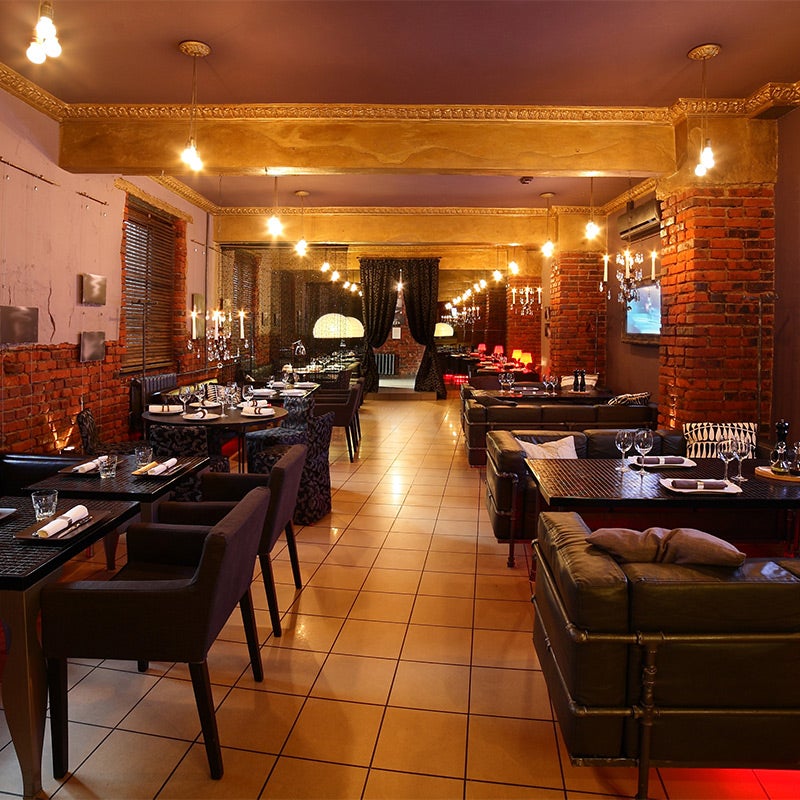
The researchers presented the respondents with the following scenario: ‘Imagine that you and a family member have decided to go out to dinner. The image you are about to see represents a restaurant in the downtown area of a medium-sized city. This restaurant is a casual restaurant that you have never been to before. The average price of an entree is $15. Similar types of restaurants would include Applebee’s or TGI Friday’s.’ They were informed that when they walked in, there were few customers and that the staff wore masks, as did customers until they received their food. The restaurant was also following strict social distancing guidelines to ensure the distance between customers was at least six feet. Then the scenario branched: They were told either that the restaurant had removed some tables to meet those guidelines or that adjacent tables would be empty. The researchers then showed them one of two images of the restaurant with its corresponding built density—either low (fewer tables with customers) or high (empty tables between the same number of customers).
Dr. Wei and her colleagues were interested in the respondents’ immediate impressions of the restaurant (positive or negative), whether it was a restaurant they’d probably revisit, and if they considered the dining area crowded. By factoring in the self-measured power variables, the researchers were then able to evaluate the relationship between personal power and built density, and how that impacts a customer’s enjoyment and intention to revisit and recommend.
ABOUT POWER AND TERRITORIALITY
The research showed that people with low levels of perceived personal power felt more comfortable with the prospect of eating at a restaurant with a high built density—a restaurant floor full of tables but with every other table empty—over one where every other table was removed to meet social distancing guidelines. According to Dr. Wei, the high built density allowed ‘low-power’ consumers to empower themselves. For them, an adjacent empty table presented an opportunity to appropriate more personal space and control—something denied them if that space was vacant, rendering their personal space limited to their own table.
What interested Dr. Wei and her colleagues was that ‘low-power’ customers in a high-built density scenario restaurant were more likely to revisit and recommend that restaurant.
‘Powerful’ respondents, on the other hand, showed no real preference for either density environment. This didn’t surprise the researchers—classical psychological literature tells us that human behavior is a product of an individual and their environment, and ‘powerful’ people are generally less affected by their environment’s social and physical aspects. It became clear that, although the research focused on how best to seat restaurant customers under COVID-19 restrictions, the outcomes had broader implications.
RESTAURANT MANAGERS TAKE NOTE
The COVID-19 pandemic and the associated demands for social distancing have created numerous challenges for restaurant owners and managers. Foremost are decreased guest traffic and how to ensure the health and safety of employees and those few guests allowed to dine at any one time. Beyond this, the primary concern is how to make those customers feel safe and enjoy themselves to a point where they would willingly revisit and recommend a restaurant. If any restaurant is to bounce back from this pandemic, it needs to instill confidence and enthusiasm in prospective customers. The research of Dr. Wei and her colleagues is so valuable here. Imagine a restaurant catering to office workers reluctantly returning to work after over a year working from home. They’re probably feeling a little overwhelmed. The knowledge that placing an empty table next to them would broaden their confidence and contribute to a more enjoyable dining experience holds significant value for restaurant managers.
Dr. Wei’s research may have shed light on how restaurant managers should adapt their service space to meet social distancing regulations demanded during a serious health epidemic, but it also adds constructive insight into how customers in general value territory when dining. Being aware that territoriality is a key determinant in how low-power customers especially perceive a dining experience, restaurant managers now have an opportunity to re-examine their servicescapes.
That’s why this research should encourage future studies to examine the phenomenon differently by observing customers’ behavior in actual restaurant settings and making inferences based on contextual realism by measuring actual satisfaction after a meal or a customer’s likelihood of returning to a restaurant.