The COVID-19 pandemic, long predicted by experts but an unexpected thunderbolt to most, had profound impacts on all facets of life.
There were degrees of devastation. For the tourism and hospitality industry, variations in the impacts cut across geographical, social, and economic fault lines. Within an industry that is critically vulnerable to hazards, some destinations were hit harder than others, offering lessons about vulnerability (the degree of exposure, sensitivity, and adaptive capacity to a hazard) and resilience (the ability to recover in a timely manner after a hazard occurs), and how they vary among tourism destinations. While crisis management planning is not a new concept for the industry, past work has not fully explored the concept of ‘destination vulnerability’. Two UCF Rosen College of Hospitality Management researchers are aiming to change this. Dr. Sergio Alvarez, a natural-resource economist, and Dr. Alan Fyall, Associate Dean Academic Affairs, and expert on tourism sustainability and resilience, have forged an interdisciplinary bridge to link models for vulnerability in the tourism and hospitality industry with existing frameworks developed within the field of hazards. They offer a conceptual model to better equip destination management organizations (DMOs)—organizations responsible for developing and promoting tourism in a given region, including tourist boards, visitor bureaus, and others)—in identifying vulnerabilities and facilitating more effective planning and decision making. Central to their work is the identification of the types of hazards most likely to impact a destination and the types of vulnerability inherent in that place.
HAZARD BUFFET
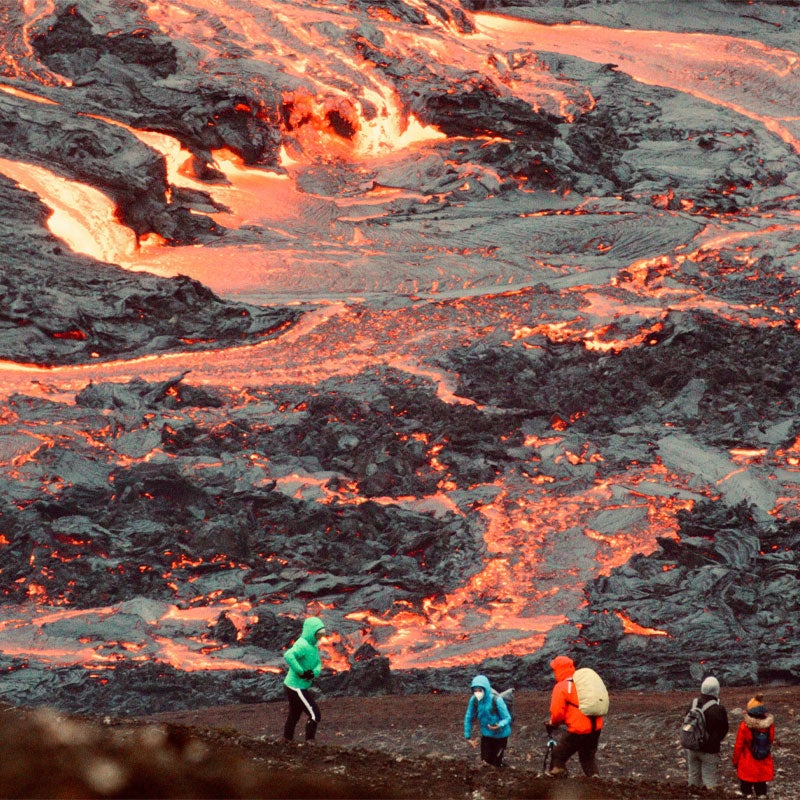
Hazards can largely be grouped into natural, human, or compound/cascading categories. Among these, the most widely recognized tend to be geophysical events such as earthquakes and volcanic eruptions, which can cause widespread damage and loss of life. The impacts of such events can continue for long periods of time. Even once infrastructure is repaired, visitors may remain wary of visiting for fear of a repeat event. However, the devil is in the detail, and the same hazard can have vastly different impacts depending on the destination. The 2019 White Island eruption in New Zealand saw the death of 22 guides and tourists and subsequent collapse of the tourist trade. In contrast, the 2021 Geldingadalur eruption in Iceland bought droves of visitors to the island in the hopes of witnessing the spectacle.
Other natural hazards include those of biological nature, with COVID-19 and Zika being recent examples of note. Hydrometeorological hazards are involved in atmospheric phenomena and the movement of water, which often occur together (e.g., the massive flooding in New Orleans following Hurricane Katrina in 2005, which decimated the city, and by extension its tourism industry). Hydrometeorological hazards are not always shock events (i.e., short-lived, such as hurricanes); they can also extend over the medium term (e.g., unseasonably high- or low-temperature conditions) or be long-term stressors. For example, the El Niño-Southern Oscillation (ENSO) changes climate conditions around the Pacific, and can even cause global damage (in 1998, an ENSO event caused global coral bleaching). The impacts of hydrometeorological events can be localized and short-lived (e.g., Caribbean Islands suffer tourism setbacks during and after large hurricanes but have historically recovered relatively quickly) or may cause long-term changes (e.g., shifting of tourist seasons in response to changing climate).
Human hazards are those with a direct link to human activity. Heightened risk of terrorism is a clear deterrent for tourists, while targeted terrorist attacks can completely close the industry within whole countries or regions (e.g., the 2015 mass shooting at a resort in Tunisia, after which tour operators withdrew from the country entirely). Armed conflict and socio-economic collapse both impact on tourism, with recent examples including widespread civil unrest in Thailand and Hong Kong. Environmental crises can damage the natural environments upon which tourist revenue depends, as happened along coastal regions of Alaska following the 1989 Exxon Valdez disaster. Conversely, some man-made disasters ultimately become a magnet for visitors, prompting the rise of so-called ‘dark tourism’ (e.g., the site of the Chernobyl nuclear disaster).
Sometimes hazards are a combination of human and natural factors; the COVID-19 pandemic likely arose because deforestation and the degradation of natural habitats have increased contact between humans and wild animals. Other examples include extreme weather phenomena made more common by human-driven climate change. In the short-term, ‘last-chance tourism’ may encourage visits to destinations that may not exist in the future (e.g., rainforests, coral reefs, glaciers), but ultimately these ‘attractions’ will cease to exist in their present form. Finally, hazards may come in compound or cascading form, here multiple hazards occur together or subsequent to each other (e.g., landslides during and after earthquakes).
TYPES OF TOURISM VULNERABILITY
The forms of vulnerability experienced by different destinations also vary widely, and broadly speaking can be classified as physical, social-cultural, economic, ecological/environmental, or institutional. Physical vulnerability is perhaps the most intuitive and encompasses the level of direct exposure to the hazard. For example, higher vulnerability occurs along fault lines or on volcanoes and along coastal margins impacted by hurricanes and sea-level rise.
Social-cultural vulnerability reflects the social, economic, demographic, and political environment. Where the community involved in the industry is strong (socially, economically, demographically, and politically), their capacity to adapt is high. However, tourism often relies on a workforce made up of marginalized communities, including those on low wages, children, women, and migrants. Another facet of social-cultural vulnerability is the degree of cultural authenticity; when heritage or culture is curated or ‘tweaked’ to appeal to tourists, its very existence comes under threat.
Economic vulnerability primarily involves the degree of dependence on the ‘tourist dollar’. In short, destinations with greater economic diversity are better shielded from crises. Critically, many destinations may, at first glance, appear to be benefiting economically from tourism, when in reality only a small part of tourist spending actually stays within the community. The international cruise industry is particularly guilty in this regard; it may bring large numbers of tourists to many destinations, but most of the money spent on food, accommodation, and experiences flows directly to the cruise company.
Ecological/environmental vulnerability is relevant to those destinations reliant on the natural environment to support the tourist industry (estimated to account for around 20% of global tourism). Sub-Saharan African countries reliant on wildlife tourists are entirely at the mercy of healthy ecosystems; mountain and ski resorts are dependent on healthy glaciers and a reliable supply of snow. In some cases, development of tourist infrastructure itself causes irreparable damage to critical environmental assets and even so-called low-impact activities (e.g., hiking, biking, scuba diving) can do harm. Moreover, tourists can also be carriers of pathogens that are introduced into new environments.
Finally, institutional vulnerability is linked to the adaptive capacity of local, regional, national, and global institutions, which in turn depend on the socio-economic/political factors at each level. Specific elements include effective governance and processes for accountability, regulatory structures, political and social stability, and financial transparency (or lack thereof), among others.
FROM FRAGILE TO ANTIFRAGILE
Given the range of complexities and confounding factors, understanding why some destinations suffer more acutely than others in the aftermath of the same or a similar hazard remains a challenge. However, assessing vulnerability at a destination level offers a good starting point. The framework proposed by Alvarez and Fyall sees the destination as the sum of its physical, social-cultural, economic, ecological/environmental, and institutional vulnerabilities, nestled within the context of its level of exposure, sensitivity, and adaptative capacity with regards to the different types of hazard. With so many moving parts, the vulnerability of any given destination, even to the same event, will differ from that of others.
By using their framework to asses vulnerability and resilience, Alvarez and Fyall hope to give DMOs the tools needed to become antifragile destinations; that is, destinations that can not only withstand shocks and stressors, but even reap new benefits by becoming stronger and more resilient after experiencing a hazard event. The scope for DMO intervention is endless, from strengthening the taxation of tourist income to allow for better local investment, to strengthening the socio-economic/political power of marginalized groups working within the industry, to promoting environmental protection. Regardless of the approach needed, with a fuller, more open perspective over nuanced local conditions, DMOs will have more scope to develop low-cost adaption strategies that are tailored to local stakeholders and conditions and are adaptive in the face of future change.