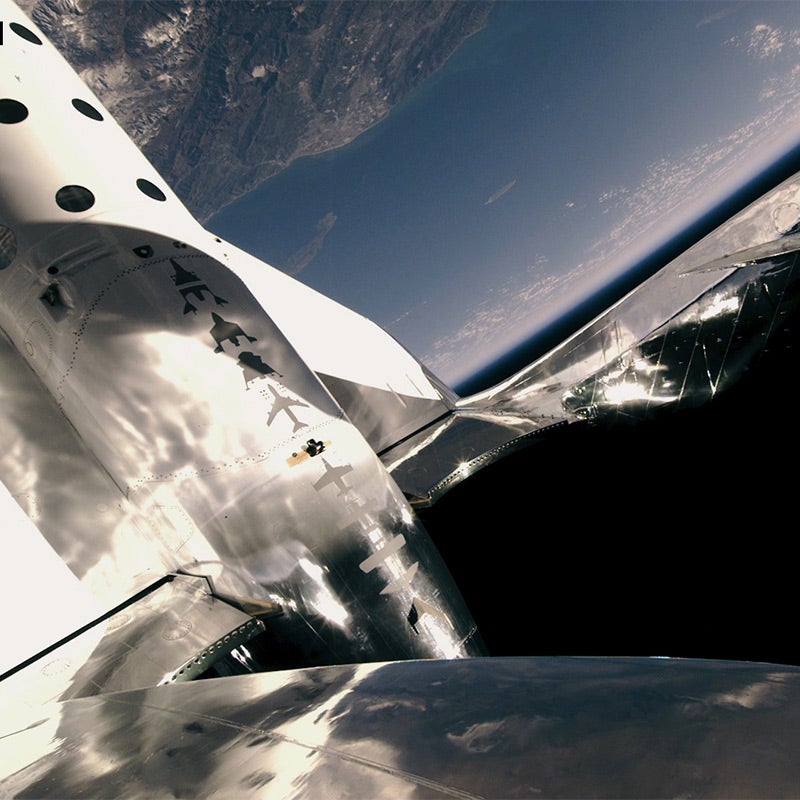
The popular TV show, Star Trek, says that space is the final frontier. On October 13, 2021, William Shatner who played Captain Kirk in the show became the oldest person to travel into space at the age of 90. Many others are keen to experience what it is like to leave the Earth’s atmosphere. In 2020, Virgin Galactic claimed that 700 ticket deposits had been paid for departures from ‘Spaceport America’ in New Mexico, whilst SpaceX has revealed they are planning to launch 10-day tourist trips to the International Space Station. In 1967, hotelier Baron Hilton first talked about building hotels on the moon. At the time, it seemed a distant dream, but over the last few years, space tourism has become more of a reality.
WHAT IS SPACE TOURISM?
Space tourism is defined by the Rosen researchers as “commercial activity offering customers direct or indirect experience with space travel”. It includes all commercial organizations that offer the opportunity for consumers to partake in activities and experiences that are related to space travel. There are three main types of space tourism—terrestrial space tourism, suborbital space tourism, and orbital space tourism—which vary hugely in terms of cost and involvement, making it difficult to predict the potential size of the space tourism market. When we think of space tourism, it is usually the suborbital kind operated by organizations such as Virgin Galactic, SpaceX and Tesla. These organizations hope to offer commercial flights at such high speeds that the traveller experiences weightlessness and can view the curvature of the Earth. Orbital space tourism is a more extreme option where tourists orbit 125 miles above the Earth and may stay there for a number of days or weeks. The final type is terrestrial space tourism, which is much more accessible to the general public. Tourists do not physically enter space but can experience similar sensations through virtual reality, space camps, and theme parks, as well as enjoying general interest activities such as space museums, rocket launches, and astronomical observations.
MEASURING ATTITUDES TO SPACE TRAVEL
In recent years, some attempts have been made to explore the demand for space tourism. Much of the focus has been on the technicalities surrounding the more intensive experiences, as well as issues relating to the cost of it. Both of these aspects are barriers that may prevent commercial space tourism from becoming a reality. However, little exploration has taken place around what consumers actually think about space tourism, and what social representations shape these views.
Recently the UK’s Prince William, The Duke of Cambridge, expressed public views that indicated saving the Earth should be prioritized ahead of space travel. This could lead to space tourism being viewed as an environmentally damaging activity. In contrast, the public may see space tourism as an amazing opportunity, or as a leap forward in scientific discovery. Understanding public opinion will help to identify and address any barriers that might hinder growth in this new tourism sector. Dr. Asli D.A. Tasci, Dr. Alan Fyall and Dr. Xiaoxiao Fu from Rosen College wanted to address the lack of research in this area by undertaking a study to assess how the public perceives space tourism. Their intention was to investigate attitudes towards commercial space travel, as well as uncovering what influences the public’s opinions around this topic. The researchers hope their findings will support professionals in the tourism industry to anticipate any potential pitfalls, as well as predict consumer appetite and behaviour for space tourism.
SOCIAL REPRESENTATIONS THEORY
The Rosen College team used the Social Representations Theory as a framework to underpin their research since one of the study’s main aims was to evaluate and model the information sources that the public have used to create their social representations around space travel.
The Social Representations Theory was first popularised in the 1980s by Moscovici. He believed that social representations enable us to function collectively within society, by helping us to cope with novel phenomena. Social representations connect reality to the social and cultural world within which we exist. These social representations are in the form of information, beliefs or even practices that we use to make sense of something that is unfamiliar. When encountering a new concept which we have not personally experienced, this theory suggests we integrate new information with existing knowledge to help translate what is alien into a context that is familiar and understandable. Space tourism is a current topic of public interest that is very much in the mainstream media, despite few people having experienced it. It has become related to certain symbols, personas, names, and images, raising questions around environmental, economic, and social benefits and costs. The Rosen College researchers believed that whilst seeking answers to these questions, the public will look at different sources of information, which in turn will feed into creating social representations.
A further aim of the study was to identify anchors—elements that use the familiar to give meaning to new concepts—and objectifications—elements that make abstract concepts become more tangible and easier to communicate—within social representations. The Rosen College team also wanted to investigate the public’s own attitudes towards taking part in space tourism, as well as their actions to support others in undertaking both commercial and scientific space travel. They hope their findings will help those seeking to develop space tourism and provide reassurance for anyone who may have concerns about this type of enterprise. This study was the first to use social representations to explore the concept of space tourism. As a result, the Rosen College researchers needed to identify any potential ‘information, icons, personas, figures, images, symbols, metaphors and names’ that may have been seen in the media or online before asking for the public’s opinions. Faculty at Rosen College who have an interest in the subject reviewed the compiled list of potential information prior to the development of a survey. Once the survey had been reviewed, 474 members of the U.S. public completed the survey. These participants rated the relevance of the different information sources relating to space tourism using a 7-point Likert scale.
RESULTS AND IMPLICATIONS
The results revealed that anchors and objectifications of social representations influence attitudes around space travel in different ways. The most influential sources of information are scientists and documentaries. The least influential sources are co-workers, celebrities, and religious leaders, which rely on personal opinions. However, anchors were from both public and personal sources, implying that personal information is relevant when making the new and unfamiliar seem real in relation to space travel.
The highest rated objectifications were scientists, individuals, and organisations that deal with space travel and tourism. Tasci, Fyall and Fu noted that, despite scientists being the most representative, their visibility was not as high as commercial organizations such as Virgin Galactic, SpaceX and Tesla. These commercial organizations have a strong influence on positive social representations and can improve the public’s attitudes towards space tourism. The researchers believe that this influence could be enhanced if these organizations were to incorporate more scientific knowledge into their key messaging and communications, potentially using documentaries and serious media broadcasts as a medium to share this information. Although highly popular in the box office, space-related movies and actors were the lowest-rated objectifications. This makes sense considering the critiques around false portrayals within many space movies.
TO INFINITY AND BEYOND?
Despite being featured regularly in the media, prior to this study there had been little research or literature around attitudes towards space tourism. The researchers from Rosen College were the first to use the Social Representations Theory to understand how people make sense of space tourism. In order to take their research a step further, they agreed that future studies should also incorporate non-conscious data from drawings, word associations and observed behaviors, as well as a more diverse participant population to understand how culture, region, personality and profession may influence people’s views.
Tasci, Fyall and Fu have highlighted some key sources that can be utilized to improve attitudes towards space tourism. They also found the public to have a fascination and wonder in relation to space travel, that provides much optimism for the success of this new tourism sector. In the famous words of astronaut Neil Armstrong, this piece of research is one small step in understanding civilians’ attitudes towards space travel but will hopefully enable industry professionals to make one giant leap towards the strategic development of sustainable space tourism.