
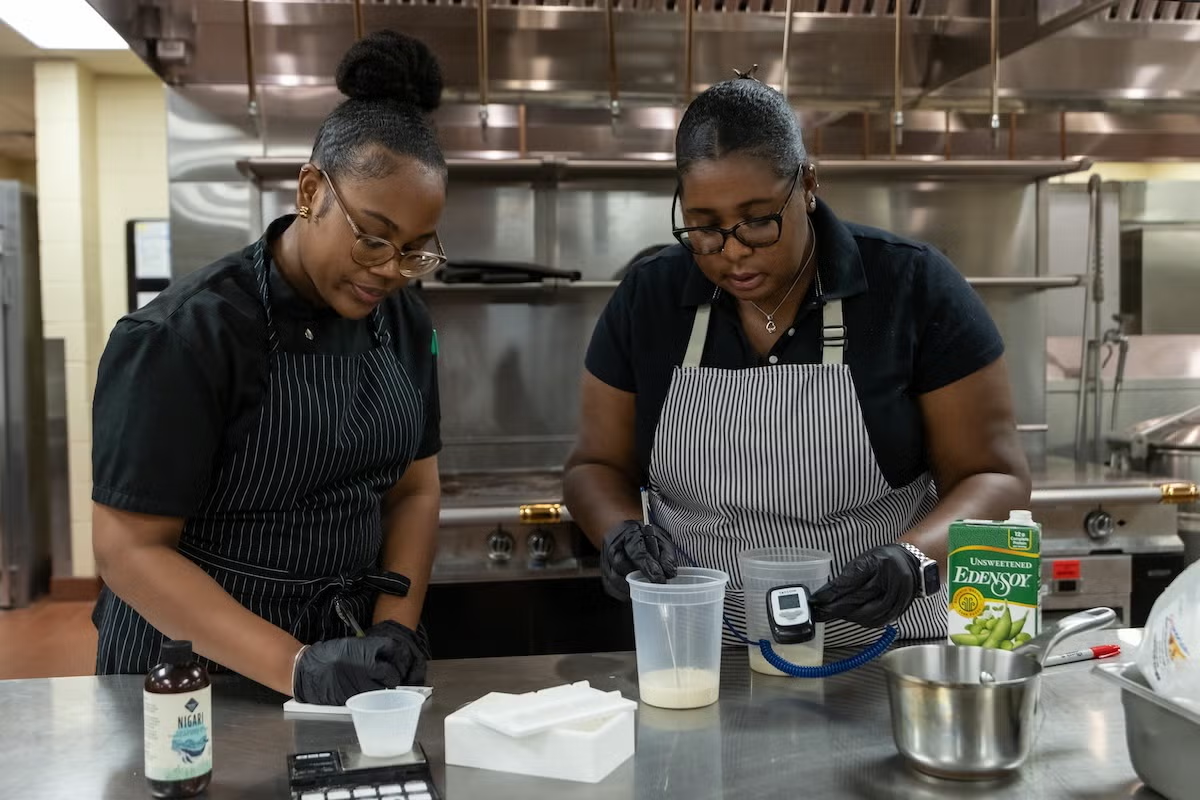
Rosen College of Hospitality Management students are taking hospitality to new heights, literally. Through hands-on participation in the national Student Spaceflight Experiments Program (Mission 21), they are helping design solutions to challenges related to living and dining in space.
The Student Spaceflight Experiments Program is a national initiative that gives students the opportunity to design real microgravity experiments for launch aboard the International Space Station. Each mission invites teams to propose research that can fit inside a small flight tube and still yield meaningful scientific insight. Proposals go through a competitive review process, and selected experiments are flown to the ISS for astronauts to conduct. For Rosen College students, the program offers a rare chance to contribute directly to space science while exploring how hospitality concepts translate to an orbital environment.
The initiative, co-directed by Dr. Amy Gregory, associate professor and Faculty Fellow for Space Tourism at Rosen College, and Dr. Phil Metzger, planetary scientist at UCF’s Florida Space Institute, brings together students from multiple disciplines to explore what life and comfort might look like beyond Earth.
While engineering students on UCF’s main campus focus on experiments in microgravity, Rosen students are studying how food preparation and preservation can adapt to long-duration space travel. Their current work centers on tofu coagulation and texture testing, research that could one day influence how astronauts and space tourists experience meals in orbit.
“Up to this point, space research has focused on getting there,” Gregory says. “Our students are asking what happens after arrival, how we create comfort, community and nourishment in space.”
The project is also integrated into the classroom through a new Food and Beverage in Space module within the Techniques of Food Preparation course, taught by Chef César Rivera-Cruzado. The curriculum allows students to combine scientific exploration with culinary creativity, linking hospitality education to one of the most exciting frontiers in human innovation.
“This field is growing fast,” Rivera-Cruzado says. “Space tourism is coming within the next decade, and hospitality will play a big role in defining what that experience looks like.”
Rosen College has also begun building relationships with space industry partners, including representatives from Blue Origin, Axiom Space, and renowned chef José Andrés, to discuss the future of space hospitality and culinary equipment development.
Together, these efforts reflect Rosen College’s commitment to innovation and collaboration, preparing students not just for the hospitality industry on Earth but for the experiences that will shape life among the stars.
Read more about this story at UCF Today here: UCF Helps Shape the Future of Space Hospitality and Tourism