The human and economic debris left when the COVID-19 pandemic is finally brought under control will be picked over by a vast array of investigators in the coming years. Some will be looking to allocate blame for failed strategies and initiatives, while others will be looking for insights that could mitigate the effects of future novel pathogens.
The authors of a recent report from Rosen College of Hospitality Management—Dr. Manuel Rivera, Dr. Murat Kizildag, and Dr. Robertico Croes—have focused on the equally important challenge of helping the most damaged sectors in our economy find the resilience to both recover from COVID-19 and withstand the next seismic shock.
Many businesses have found a way to generate some revenue. Some restaurants turned their focus to take-out, either facilitated by the rapidly growing delivery services or by setting up their own distribution or innovative drive-thru solutions. At the first easing of restrictions, those in the right climate and with the right facilities could focus on their al-fresco offers, with customers reassured by the reduced transmissibility of the virus in the open air.
There has been no such innovation for accommodation, however. With lodgings, people either come and stay or they do not. So, without a doubt, the accommodation sector has been one of the worst hit of the hospitality and service industries.
NO REST FOR ACCOMMODATION
Often, when we think about the accommodation sector of the hospitality industry, we tend to picture the big chain hotels. Ranging from the budget brands that appear in nearly all big towns, to the iconic venues that are part of our cultural history, such as the Waldorf Astoria or the Fontainebleau in Miami Beach, Florida.
There is another more niche player in the sector, however, that has suffered perhaps the worst economic impact of all business categories: the independent small lodging establishments (SLEs).
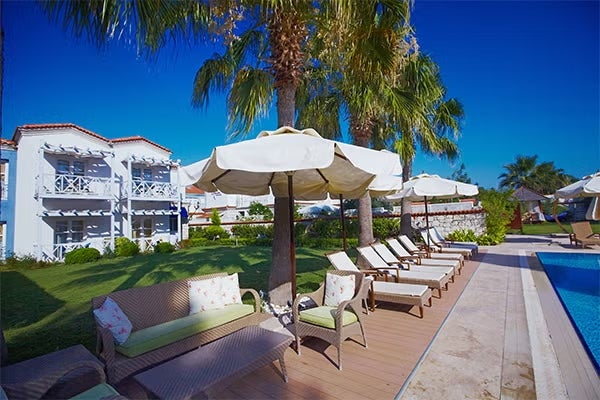
SLEs tend to share some unique characteristics that mean they cannot be understood simply as ‘scaled down’ big hotels. The typical SLE is single person- or family-owned, and very often owner-managed, utilizing family labor sometimes enhanced with locally sourced hourly paid labor. Many cater primarily for tourists, with catering restricted to breakfast only, and a focus on location, comfort and high levels of host–guest interaction and personal service. The latter is a unique ‘brand asset’ that often keeps patrons coming back year on year.
However, SLEs are also noted within the sector for having disproportionately high fixed assets compared to other forms of accommodation, higher fixed costs, and a much higher sensitivity to ‘seismic’ shocks—whether local, national, or global, such as COVID-19. Taking away the SLE’s revenue, as has happened with the pandemic, may be accompanied by a small mitigating reduction in variable cost, but those high fixed costs must still be met.
The authors also note the impact of uncoordinated and varying policies of pandemic intervention by federal, state, and local jurisdictions, leading to comprehensive disruption of entire supply-chains serving hotel establishments. Such uncertainties—in terms of restrictions, support, and future supplies—only exacerbate the trauma faced by the smallest operations.
One problem for support intervention and future recovery strategies, identified by Dr. Rivera and his colleagues, is that the SLE sector is relatively ‘ignored’, especially where industry data collection is concerned. The influential Smith Travel Research (STR) index, for example, does not track any data for establishments with less than 20 rooms.
This lack of background data is not only a factor in assessing the priority and degree of support during the lockdown phase of the pandemic. It also severely affects how these businesses can best prepare themselves for a post-pandemic world, a world in which the re-emerging market may be reassessing its priorities—looking for more visible sanitation, hygiene, and safety standards to complement the comfort and friendly-host elements of the package.
SECTOR INSIGHTS
The researchers sought to develop an understanding of the operational and financial dynamics of the SLE segment through an analysis of the membership of the Superior Small Lodgings (SSL) of Florida, USA.
SSL comprises 170 independent ‘innkeepers’ who generally fit the descriptions of SLEs outlined above. The study identified four different categories of establishment defined by capacity: 10 rooms or less (28 SLEs), 11–20 rooms (29), 21–29 rooms (15), and 30 or more rooms (27). Of these, 90% are family owned, they have existed on average for over 17 years, and average 2 salaried and 15 hourly paid employees.
The study collected financial data, based on a 15-question online survey, to assess the impact of the initial Florida shut-down period. From the 170-establishment population, a useable sample of 99 completed surveys provided a representative sample of Florida SLEs.
A BREAKEVEN CALIBRATION ANALYSIS (BCA) MODEL
Resilience in the face of seismic shock—as in the case of a mandated shut-down—and the ability of a business to bounce forward, is dependent on many factors. These include the determination of the owner(s), meeting any changed expectations of the market, and using promotion to encourage demand.
This study did not just consider resilience in the face of the COVID-19 shock, however, but also how these businesses can be better prepared and more resilient in the face of future shocks. The focus was on the budgeting and financial management of the business, i.e., how profit is generated from such revenues as are available.
The authors created a breakeven calibration model that allows an individual business or category to ‘stress test’ in order to understand their shock sensitivity from a financial perspective. Initially the four categories of establishment by room numbers, detailed above, were characterized by number of employees (salaried and hourly paid), years of operational experience, and type of ownership (family or other).
This was then correlated with operational data based on: room nights available, occupancy rates, profit margin contribution per sale, and the total revenue required to achieve financial breakeven through room sales. The final factor was the average daily room rate (ADR) that is generated at breakeven.
The two changing parameters of ‘rooms sold’ and ‘ADR’ were then tested to see how sensitive business profits are when there are drastic changes to those parameters.
RESULTS
Although the four SLE sub-groups are located in a similar coastal location and share many market characteristics, their resilience to external shocks varied against some criteria, when assessed through the breakeven calibration analysis model.
For example, the 21–29 room sub-group showed the most vulnerability to the pandemic and will face greater challenges during the recovery phase.
Overall, the four sub-groups maintained their ADR levels in the pre-pandemic period, suggesting that the strong relationship between guest and host, together with the location and service benefits, creates an inelastic price niche. This would have predicted good profit margins but for the intervention of COVID-19.
Generally, in the SLE sector, it was found that there was little differentiation, with few additional services—such as food and beverages (beyond the standard breakfast), fitness centers, or saunas, for example—that might encourage competition within the sector or attract a more demanding guest.
The authors also report that there is little engagement with modern hospitality management tools, such as yield management or marketing platforms that could help develop their markets and lower transaction costs.
IMPLICATIONS
The study yielded numerous important insights. If SLEs are to develop financial management skills to ensure they are operating optimally and are better able to withstand future shocks, then the BCA model will be a useful tool to assist them.
However, they may not be able to achieve that individually. Instead, there could be an initiative from bodies like the Superior Small Lodgings (SSL) group that could facilitate such development for all its members. Additionally, destination management organizations (DMOs) could provide similar support for the improvement of resilience for their local SLEs.
Finally, Rivera, Kizildag and Croes encourage further research to better understand the heterogenous nature and needs of these small sub-sectors of hospitality to facilitate their survival, resilience, and future growth.