In its annual statistics for 2019—the year before the start of the global COVID-19 pandemic—the United Nations World Tourism Organization (UNWTO) reported that tourism had experienced a tenth year of continued growth. With 1.5 billion international tourist arrivals worldwide, tourism contributed an estimated $9 trillion a year to the global economy and was one of the world’s largest industries.
Fast forward to 2021, and tourism is one of the industries most affected by the global pandemic. The UNWTO now reports that international tourist arrivals fell by 72% between January and October 2020, due to countries’ efforts to contain the virus, travel restrictions, and low traveller confidence. The loss of global revenues is estimated to be around $1 trillion—ten times that experienced after the 2009 global economic crisis—and this has hit developing countries dependent on tourism particularly hard.
As the world prepares to rebuild its tourist economy, new research by Rosen College’s Associate Dean, Dr. Robertico Croes, together with colleagues Dr. Jorge Ridderstaat and Dr. Valeriya Shapoval, is timely. Published in the prestigious international journal Annals of Tourism Research, their study “Extending tourism competitiveness to human development” looks at the links between tourism competitiveness and human development and presents a new “Tourism Competitiveness Theory Hypothesis” and typology model.
TOURISM COMPETITIVENESS
The initial literature review conducted by the Rosen College researchers reveals that tourism competitiveness has multiple definitions. They identify two main approaches: one which “focuses on internal attributes and abilities, aiming at enhancing residents’ well-being” and another which “links tourism to market position revealed in larger numbers of tourist arrivals.” Put simply, one approach prioritises the social, while the other is concerned with the economic.
The two approaches appear mutually exclusive and may have different outcomes. For example, the market approach may imply the pursuit of “monopolistic objectives” and “hamper the goal of well-being”, whereas the internally focused approach “centres on productivity to enhance well-being and to pay higher wages.”
Tourism competitiveness has many inputs and is a “multidimensional concept determined by economic, political, ecological and cultural variables.” As a result, tourism competitiveness is inherently hard to measure and not all the variables carry the same weight. For example, a country’s rich cultural heritage does not automatically result in the enhanced well-being of indigenous communities.
Dr. Croes, Dr. Ridderstaat and Dr. Shapoval argue that there are two main premises behind the tourism competitiveness construct. The first is that the tourism product relies on instrumental activities that have costs and benefits and result in revenue. The second is that the tourism product is built on a framework of limited, costly and depletable resources.
HUMAN DEVELOPMENT
It is widely recognised that tourism can be a catalyst for economic and social development, not least through the provision of employment. This is especially important in developing regions, where the UNWTO estimates that up to 40% of jobs are generated by tourism. However, as the researchers explain, human development is about more than income: it is also about capability and whether people have the resources to be able to choose from the opportunities available.
The Human Development Index (HDI) launched by the United Nations Development Programme (UNDP) in 1990 studies data from 189 countries, allowing for the measurement of human development between countries and over time. The UN’s approach shifts attention from inputs, such as incomes and possessions, to outcomes, such as the ability to live a good life. Various indicators are used to quantify how countries perform on each dimension. For example, in addition to economic measures and GDP, the HDI considers literacy rates, life expectancy, and expected years of schooling.
The Rosen College researchers argue that the HDI approach is particularly helpful regarding tourism competitiveness. This is not least because tourism competitiveness provides the material resources to support human development by increasing people’s choices and opportunities to realize healthy, fulfilling lives.
THE HYPOTHESIS
The study redefines tourism competitiveness as “the reconfiguration of resources, assets, and services toward a product that increases satisfying and memorable tourist experiences.”
The hypothesis developed by the researchers proposes that tourism competitiveness has four characteristics: “long-term performance moored in productivity;” “resource and asset control which references product quality and derived memorable experiences;” “relativity, which is the ability to attract tourists over competing destinations;” and “dynamic processes, which implies that the product constantly evolves by building capabilities.”
Dr. Croes, Dr. Ridderstaat and Dr. Shapoval argue that tourism competitiveness is conceptually linked to human development in a mutually beneficial way. The Tourism Competitiveness Theory Hypothesis they propose reflects the reciprocal nature of the relationship.
CASE STUDY APPROACH
The study examines two main questions to test the theory: what is the conceptual connection between tourism competitiveness and human development, and does the connection explain differences in tourism competitiveness over time? Taking a case study approach, the research focuses on 10 South American countries: Argentina, Bolivia, Brazil, Chile, Colombia, Ecuador, Paraguay, Peru, Uruguay, and Venezuela.
As the researchers note, while the countries may have some regional affinities, they vary in terms of area, population, economy, per capita income, income inequality and tourism exports. In addition, though tourism represents one-third of the region’s exports, “tourism output is modest and regional competition small.” For example, South America’s total revenue from tourism in 2018 was US $30 billion compared to a revenue of US $32 billion in the Caribbean.
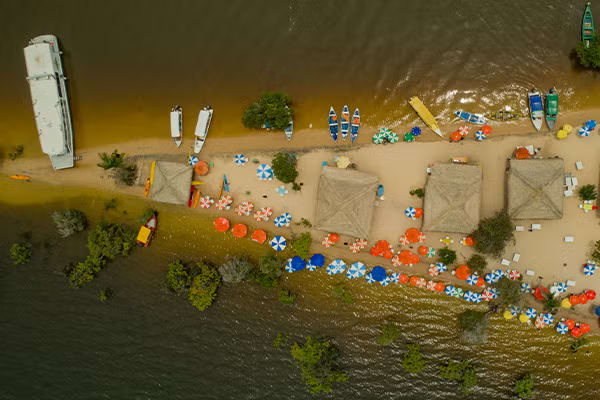
Despite this, South America has significant tourist potential. For example, it possesses no fewer than 76 UNESCO world heritage sites and the Amazon rainforest is one of the most biodiverse environments in the world. The region has also in recent years demonstrated sustained economic growth and reductions in income inequality, though a quarter of the population remains poor.
Using data covering the period 1998–2014 from various sources—including the World Economic Forum, United Nations and World Bank—the researchers conducted an in-depth analysis using sophisticated statistical techniques to compare tourism performance and identify patterns across the 10 sample countries.
The researchers then designed a typology model identifying four distinct country behaviours, highlighting the way tourism competitiveness and human development are linked. The types identified are “virtuous,” meaning good tourism competitiveness enhances human development, which further boosts tourism competitiveness in turn; “vicious,” meaning weak tourism competitiveness hampers human development, which weakens tourism competitiveness yet further; “tourism competitiveness lopsided,” meaning strong tourism competitiveness is combined with weak human development; and “human development lopsided,” meaning strong human development coupled with weak tourism competitiveness.
FINDINGS
The majority of the 10 countries were found to be either in the “human development lopsided” or “vicious” destination categories. According to the researchers, these findings suggest that in these destinations tourism competitiveness has been relatively depressed, or the countries have not made tourism development a priority.
Another pattern identified in the research was that few countries stayed in the same category over time. The exceptions were Ecuador, which stayed in the “virtuous” quadrant, and Chile, Paraguay and Uruguay, which stayed in the “human development lopsided” category for the whole research period.
The study found that most countries moved from one category to another, regressing or progressing through time. For example, Venezuela regressed from being a “virtuous destination” between 1998–2006 to being a “vicious destination” more recently. Other countries showed less dramatic shifts, with Argentina regressing from a “virtuous destination” in the first part of the study to a “human development lopsided” destination in recent years. Bolivia and Colombia also regressed in tourism competitiveness, though human development remained stable. Only Brazil remained stable in human development while becoming stronger in tourism competitiveness.
WIDER IMPLICATIONS
This latest research from Rosen College researchers brings the competitiveness and capabilities concepts together in the formulation of a new Tourism Competitiveness Theory Hypothesis. The study finds: “Tourism growth resulting from arrivals and receipts seems to expand capabilities directly, suggesting that as average receipts increase, the population seems to have higher commands of resources (health and education), which in turn enhances tourism performance.”
The research suggests further that while human development significantly affects tourism competitiveness, tourism competitiveness only partially affects human development. The report recommends that countries should strive to deepen the links between tourism and human development and recognise that they are mutually reinforcing and interdependent.
Though focused on South America, the study’s recommendations are of wider global interest. In particular, it suggests that national tourism strategies should seek to promote more arrivals and higher tourism revenues, in order to benefit household as well as government revenues. In addition, strategies should be less concerned with the amount of government revenue raised, and more concerned with how revenues are used to benefit human development, particularly health.